

How to shoot perfect aerial footage. The 3 S rule
Drone pilots know specific tricks for getting good footage!
· 3 min read
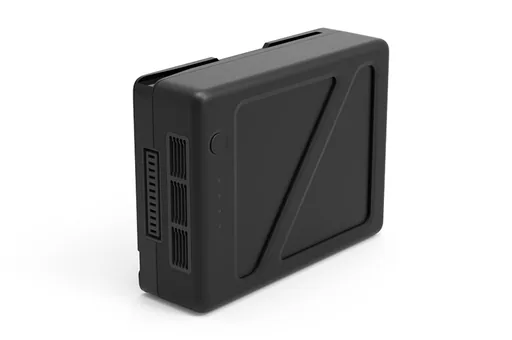
Battery life is the nightmare (or at least one of the recurring worries) of every drone pilot, whether professional or aspiring to become one.
Drone technology, in fact, makes it possible to carry out increasingly complex jobs, during which an interruption to change the battery is in most cases a nuisance, not to mention that battery life forces you to plan the flight around its duration.
In fact, even though there is a range of tech and professional drones equipped with a "return to home" feature that brings the drone back to base when the battery is about to run out, it is still important to know well the average life of your battery in every situation, also in order to put into practice some tricks to make it last longer, not only on each operation but also over its life cycle.
And it is precisely for this last need that today we give you 7 tips:
It seems trivial, so trivial that few people think about it. Batteries are extremely important in electronic modelling, and so there are universal battery chargers that can charge all formats (Nickel Cadmium, Nickel Metal Hydride or Lithium) and ensure the correct charging cycle for each. This too is a very important point that deserves its own paragraph:
Lithium batteries are considered the best, and their price range only confirms their value.
Because of this value and price, it is important not only to make each charge cycle of a lithium battery last longer, but also its entire life cycle.
A trick to do this is to never charge the battery when it is completely discharged, because with every full charge it actually becomes weaker and its life shortens (it seems that a lithium-ion battery can be fully charged and discharged from 300 to 400 times
One precaution is therefore to charge it each time between 40 and 80% to make it live longer and avoid overcharging.
You will say: but then the flight lasts less!
It depends on:
If you charge to 80% a few hours, or better a few minutes, before the flight, it will last longer (we are obviously talking about a few minutes, which however can make a difference in a video or in a mapping job, which thanks to drones takes just a few hours).
In fact every battery loses a percentage of charge day after day, even when not in use, and for this reason it is important to operate with a 'freshly charged' battery. In short, it is advisable for the battery to finish charging (to 70-80%) at most 4-5 hours before use.
The charging location is also decisive for the duration of each cycle and of the life cycle. A cold temperature significantly reduces autonomy. You must charge within a temperature range suited to the type of battery.
So, let's recap the last three points:
if you have to fly your drone on Thursday afternoon and you charge the battery to 100% at 2 degrees on Monday, the flight may last less than if you charge the battery on Thursday morning to 80% in an environment of 20-25 degrees.
There are operations that do not require the camera: simple practice, a scouting flight, if you want to get to know and study the remote controllers, if you want to get used to a new tool; in short, if you don't strictly need the camera, make your drone fly lighter.
In fact, it adds weight and therefore puts the motors and propellers under greater strain, affecting consumption. Not to mention that many cameras are also powered by the drone's battery, and not just by their own built-in one.
Small gusts of wind, less rarefied and heavier air, low pressure: these are all factors that demand more effort and consumption from the drone and its motors. If possible, it is advisable to minimise activity in this kind of environment.
If there are propellers made of so many materials, in so many different sizes, if there are so many different drone models, it is certainly not just for aesthetic reasons, but for engineering reasons. If your drone is designed to always carry the camera on board, if you only survey in areas with little rarefied air, if you specialise in agricultural mapping and therefore have to work with complex cameras in particular weather conditions (hot, exposed to small gusts, etc.), then you need propellers suited not only to the drone but also to the battery.
Ask your manufacturers, or the company or body that certified your drone (as recognised by ENAC), to advise you on the most suitable propellers for your machine.
Diagnosis, repairs and maintenance in our workshop in Brindisi: open a case online and track the repair status.
Request assistance
Drone pilots know specific tricks for getting good footage!
· 3 min read
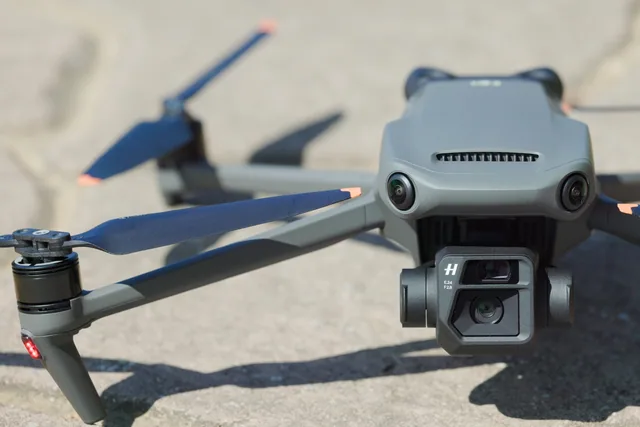
Flying a professional drone may seem simple, but behind every successful flight lies a combination of preparation, attention and knowledge.
· 3 min read
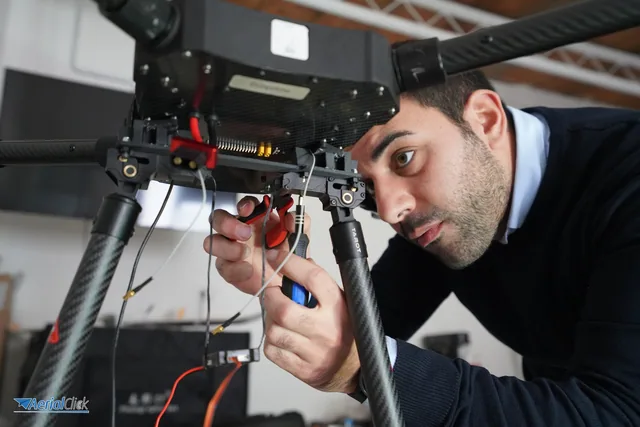
Every drone pilot knows it, from the very moment they start flying their drone and from the moment they are awarded their UAS Operator certification: that...
· 4 min read
🍪 Cookies on AerialClick
We use technical cookies, which are necessary for the site (cart, login). With your consent we also use marketing cookies (Meta) to measure campaigns and show you relevant ads. You can change your mind at any time from "Cookie preferences" at the bottom of the page. Cookie policy