
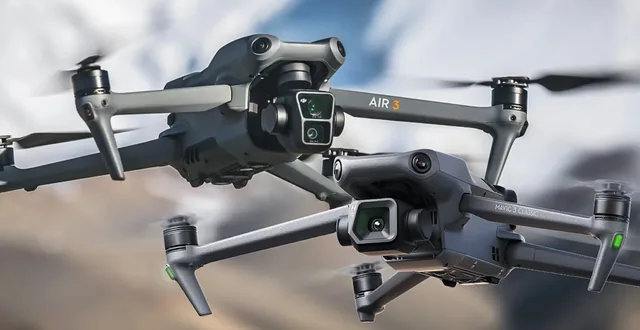
DJI Air 3 and Mavic 3 Classic: are they the same?
Yesterday DJI launched its new foldable drone, part of the Air series: the DJI Air 3 !
· 3 min read
Archive article. Article from 2021: some of the models mentioned are no longer in production. Today the equivalent model is DJI Mavic 4 Pro. Discover DJI Mavic 4 Pro
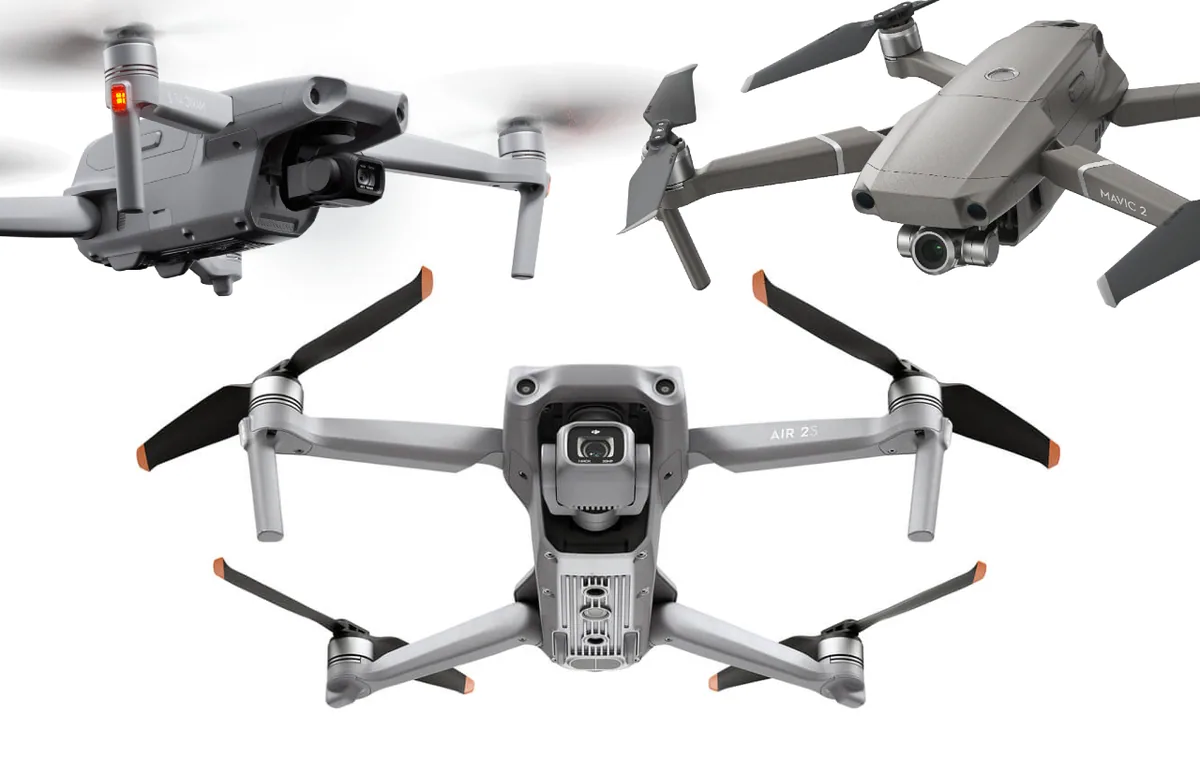
WELCOME DJI AIR 2S: what are the differences from the Mavic 2 Pro?
The DJI Air 2S is here and packs a lot into its small frame!
Its standout features include a one-inch sensor capable of capturing 20 MP still images and powerful 5.4K video, all in a drone weighing under 600 g.
So how does it compare with its older siblings, in particular the Mavic Air 2 and the Mavic 2 Pro?
Is it enough for Mavic Air 2 pilots (released only a year earlier) to consider an upgrade?
The Pro, which for years has flown the flag as the ultimate compact, portable camera drone, finally has a worthy successor?
Let's find out together by analysing the new features of the DJI Air 2S.
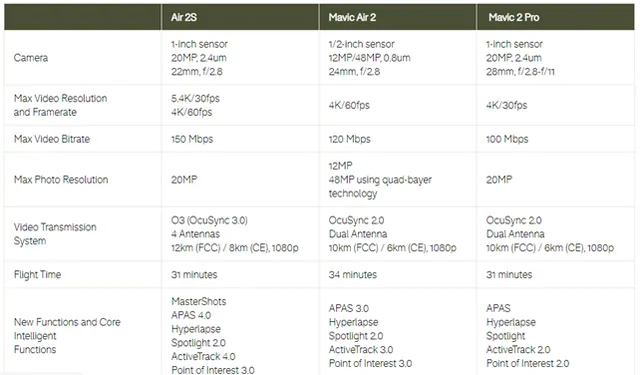
Before diving into the in-depth comparison, here are the key specifications of all three drones.

DESIGN
All three of these Mavic drones feature a foldable design, which makes them handy for transport; especially useful for content creators on the move.
The Mavic range is famous for its portability, and the recent additions to the lineup have taken it a step further.
For example, the Mavic 2 Pro has always been a great drone to take on the go, but at 907 g it is noticeably heavier than the newer Mavic Air 2 (570 g) and the Air 2S (595 g), making these new models even easier to carry.
And as the table below shows, the Mavic 2S and the Mavic Air 2 are more compact drones.

However, one thing to note is that the Air 2S does not yet have a CE certification to operate in compliance with EASA regulations.
The most significant upgrade of the Air 2S is its camera.
First, the sensor. The Air 2S boasts a 1-inch sensor, very impressive for such a small drone.
This is larger than the half-inch sensor of the Mavic Air 2, but on par with the Mavic 2 Pro.
Both the Mavic Air 2 and the Mavic 2 Pro can capture 20 MP photos, while the Mavic Air 2 can capture 12 MP images or, using its Quad Bayer sensor to perform a technique called pixel-binning, can reach 48 MP.
But with the larger sensor and the 20 MP camera, the DJI Air 2S and Mavic 2 Pro have noticeably better low-light performance and image quality.
In addition, the Air 2S has up to 8x digital zoom (including 4x zoom at 4K / 30fps), which allows pilots to get closer to the subject without moving the drone. By comparison, a firmware update gave the Mavic Air 2 digital zoom capabilities: 2x zoom at 4K / 30fps and 4x zoom at 1080p / 60fps.
The Mavic 2 Pro benefits from an adjustable aperture, ranging from f / 2.8 to f / 11, while the apertures of both AIR drones are fixed at f / 2.8.
In many ways, the lack of an adjustable aperture is a disappointing omission from the new Mavic AIR 2S. DJI has slightly mitigated this by adding ND filters to the Fly More combos of the Air 2S and Mavic Air 2, but it would have been nice to have an adjustable aperture as standard.
One of the most exciting aspects of the Air 2, and where it stands out from the Mavic 2 Pro and Mavic Air 2, is its impressive video recording specifications.
The Air 2 can shoot a powerful 5.4K at 30 fps, and it can also do 4K at 60 fps. Its 150 Mbps is impressive for a drone of this size. In fact, it makes it a top-quality video drone on a par with a DJI Inspire 2 equipped with a Zenmuse.
By comparison, the Mavic Air 2 tops out at 4K @ 60fps, with a maximum bitrate of 120, while the Mavic 2 Pro can only support 4K up to 30fps, reaching 100 Mbps. For years, the Mavic 2 Pro set the standard, but in this department the king of drones seems to be showing its age.
All three Mavic drones have 8 GB of internal storage. The Air 2S and Mavic Air 2 can also use a microSD card with a capacity of up to 256 GB. The Mavic 2 Pro can be fitted with a microSD card, but with a reduced capacity of 128 GB.
The Air 2S boasts some impressive performance upgrades.
Using DJI O3 technology, renamed from OcuSync 3.0, and with four antennas, the Air 2S can reach distances of up to 12 km (FCC) or 8 km (CE).
This exceeds the transmission distances of the Mavic Air 2 and Mavic 2 Pro; both use the previous version of OcuSync - OcuSync 2.0 - and have dual antennas, reaching 10 km (FCC) or 6 km (CE).
All three drones have similar wind speed resistance, reaching a maximum of about 10.5 m/s (level 5).
If there is one area where the Air 2S falls short of the other two, it is the operating temperature. Both the Mavic Air 2 and the Mavic 2 Pro can operate at lower temperatures (from -10 °C to 40 °C), while the Air 2S cannot (from 0 °C to 40 °C).
The Air 2S has the same maximum flight time as the Mavic 2 Pro, with a duration of 31 minutes. The Mavic Air 2 is the best in this department, thanks to its ability to stay airborne for 34 minutes.
As for the updated features, the Air 2S has APAS 4.0, the latest and most advanced version of DJI's advanced pilot assistance system.
While flying at normal speeds, the newly improved APAS 4.0 offers a wider field of view for detecting obstacles compared to previous versions. For reference, the Mavic Air 2 has APAS 3.0, while the Mavic 2 Pro has APAS.
With APAS 4.0, if pilots fly the Air 2S at higher speeds, the drone tilts further forward and the (newly added) upward obstacle sensor plays a key role in assisting obstacle detection.
The Air 2S comes with DJI AirSense; ADS-B technology that alerts pilots to nearby airplanes and helicopters. The Mavic 2 Pro does not have this feature, while currently only the North American models of the Mavic Air 2 are equipped with AirSense.
CONCLUSIONS
The DJI Air 2S is the latest addition to the Mavic family and is a quality entry that, like the others before it, raises the bar.
The crown jewel is its camera: its one-inch sensor, capable of capturing 20 MP photos with a high pixel count, and its ultra HD 5.4K video capture capabilities.
The fact that it still sells well now - almost three years after launch - is a testament to its capabilities.
But the Air 2S is now a worthy contender to take this crown. Its photographic capabilities are on par, although the Air 2S has the ability to zoom, but the real value is in its superior video specs, with a faster bitrate and incredibly impressive 5.4K at 30 fps.
There is also the advantage that the Air 2S is a smaller and lighter drone than the Pro and, at launch, is significantly cheaper than its bigger sibling.
Innovative Mavic drones have always been known for pushing boundaries, and the Air 2S has done it once again.
DJI has created the smallest and lightest 1-inch camera drone, weighing less than 600 g.
Combining portability with high image quality, new smart features and improved performance, the Air 2S is truly an all-in-one solution that will surely satisfy content creators.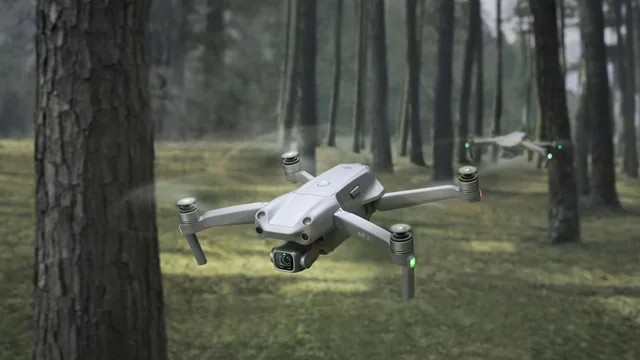
Selected by our staff based on the topic of the article. Not sure which one to choose? Ask us for advice.
We are an authorised DJI reseller and carry the main professional brands: we will advise you with no obligation, also on WhatsApp.
Go to the shop
Yesterday DJI launched its new foldable drone, part of the Air series: the DJI Air 3 !
· 3 min read
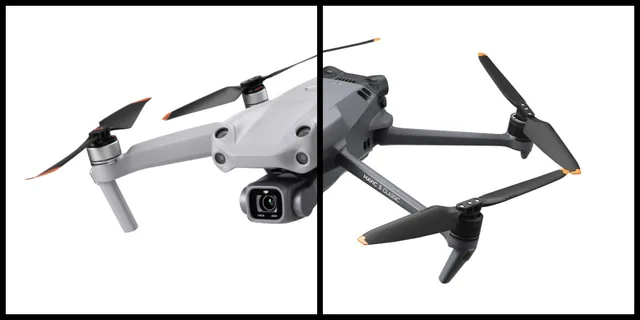
On 2 November, DJI unveiled a new drone in the Mavic series: the Mavic 3 Classic.
· 4 min read
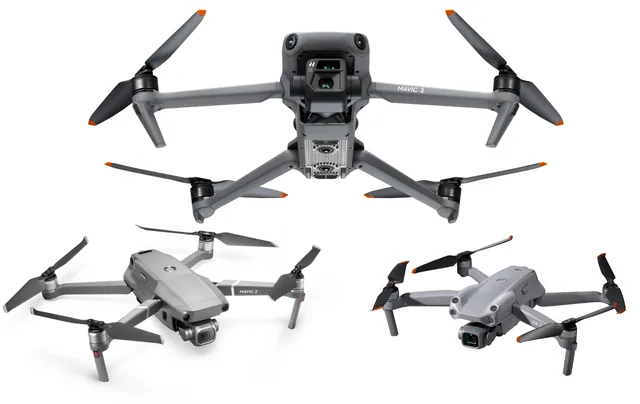
Starting from the night of November 5, DJI made available one of the most anticipated drones for professionals and enthusiasts in the drone world.
· 4 min read
🍪 Cookies on AerialClick
We use technical cookies, which are necessary for the site (cart, login). With your consent we also use marketing cookies (Meta) to measure campaigns and show you relevant ads. You can change your mind at any time from "Cookie preferences" at the bottom of the page. Cookie policy