
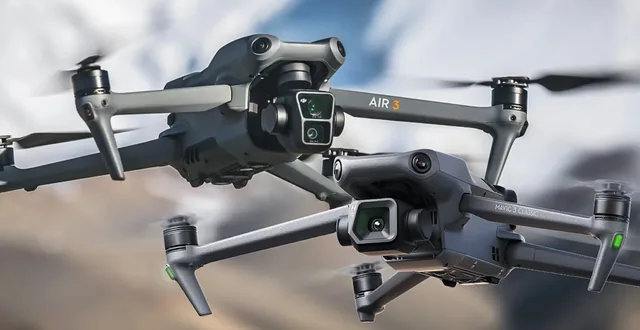
DJI Air 3 and Mavic 3 Classic: are they the same?
Yesterday DJI launched its new foldable drone, part of the Air series: the DJI Air 3 !
· 3 min read
Archive article. Article from 2022: some of the models mentioned are no longer in production. Today the equivalent model is DJI Mavic 4 Pro. Discover DJI Mavic 4 Pro
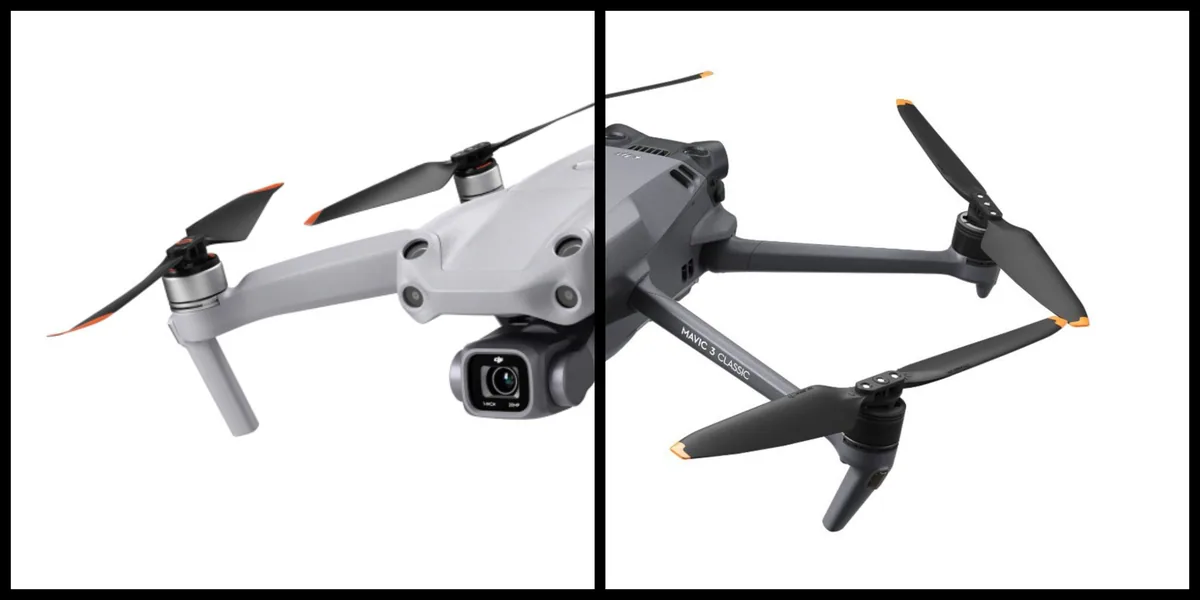
Last 2 November, DJI unveiled a new drone in the Mavic series: the Mavic 3 Classic.
Simplistically described by many as the “simplified version of the Mavic 3 Cine”, today the Mavic 3 Classic represents a step forward on several fronts, especially in the semi-professional drone segment.
In fact, in this article we will not compare it with the Mavic 3 Cine, but will focus on the semi-professional level, placing it alongside the Air 2S, to see exactly which features the two drones have in common and how to guide your purchasing decision based on them.
|
Mavic 3 Classic |
Air 2S |
|
|
Dimensions |
Unfolded 347.5×283×107.7 mm |
Unfolded 183×253×77 mm |
|
Weight |
895 grams |
595 grams |
|
Flight time |
46 minutes |
31 minutes |
|
Camera |
4/3" CMOS with 20MP |
1" CMOS with 20MP |
|
Video resolution |
Up to 5.1K |
Up to 5.4K |
|
Video transmission |
OcuSync 3+ (1080p at 60fps) |
Ocusync 3.0 (1080p at 30fps) |
|
Digital zoom |
1-3x |
1-4x |
|
APAS |
APAS 5.0 |
APAS 4.0 |
|
Obstacle sensors |
Upward, downward, backward, |
Upward, downward, backward |
A key component to consider when choosing the right drone is obviously the camera. In particular, let's look at the sensor fitted to the two models: even though the video resolution of the Air 2S is 5.4K at 30 fps, while that of the Mavic 3 Classic stops at 5.1K (but with smoother video at 50fps), the camera of the Air 2S has a 1-inch sensor, while that of the Mavic 3 Classic is a Hasselblad, which on paper is of better quality, being a 4/3 CMOS.
As for the resolution quality of still photos, in both cases we are talking about 20MP.
In terms of the sensor's light sensitivity, the two devices are quite similar, although the DJI Air 2S camera can reach ISO 12800 in photos, while the DJI Mavic 3 Classic will be limited in all cases to between ISO 100 and 6400.
On the other hand, as regards shutter speed, both drones can range from 8s to 1/8000s. However, the DJI Mavic 3 Classic has the advantage of being able to adjust its aperture, whereas the DJI Air 2S has a fixed f/2.8 aperture.
Another element that sparks plenty of debate is certainly the zoom. The DJI Mavic 3 Classic has a maximum digital zoom of 3X (at any resolution), while from this point of view the DJI Air 2S is certainly more versatile starting from 4K, since you can digitally zoom up to 4X, and when recording in HD (1080p) you can zoom up to 8X.
Finally, the endurance of the Mavic 3 Classic and its wind resistance make it superior to the DJI Air 2S:
The Mavic 3 Classic has a flight time of 46 minutes and a wind resistance of 43 km/h.
The Air 2S has a flight time of 31 minutes and a wind resistance of just over 38 km/h.
Moreover, the DJI Mavic 3 Classic features omnidirectional obstacle sensing. The Air 2S lacks 360° sensing, as it does not have the side sensors found on the 3 Classic.
The DJI Mavic 3 Classic benefits from an improved version of OcuSync, called O3+. The DJI Air 2S, on the other hand, is the drone that introduced OcuSync 3.0.
What is the difference between these versions? The DJI Mavic 3 Classic offers potentially higher video downlink quality, up to 1080p at 60 fps, while the DJI Air 2S is limited to a 1080p video downlink at 30 fps.
One last factor not to be underestimated is the C1 certification that the Mavic 3 Classic carries.
The introduction of the CE marking on the DJI drone makes it fully compliant with the EASA regulations regarding the classification of aircraft into categories, and it will be able to fly in the A1 subcategory without any problems, even when the CE marking regulation finally comes into force.
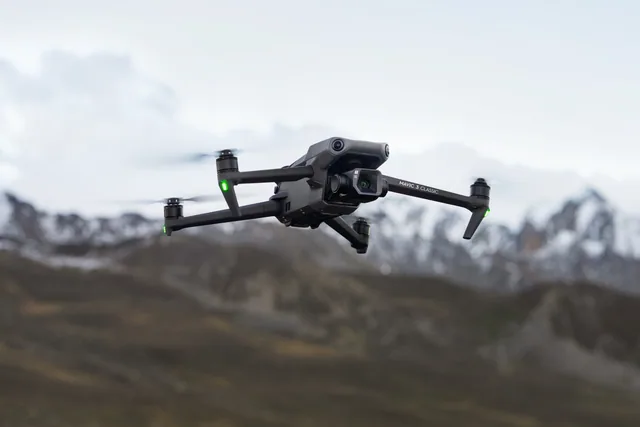
After the comparisons made, the choice in terms of quality would fall more on the Mavic 3 Classic, rather than the Air 2S. Nevertheless, the Air 2S proves to be an excellent drone in the same category, especially as regards price. The lower price of the Air 2S, which ranges between €1000 and €1700 (the higher price includes the smart controller and the combo version), is much more competitive than that of the Mavic 3 Classic, which ranges from €1500 to over €1700 (none of the packages available at these prices includes the combo version).
Our advice is nonetheless to choose a more innovative drone, newly in production and with the C1 marking, because having the CE marking will keep the aircraft viable even under the final EASA regulation. The drone that would therefore be the preferred choice between the two is the new Mavic 3 Classic, even though the Air 2S still holds its own in the comparison.
Selected by our staff based on the topic of the article. Not sure which one to choose? Ask us for advice.
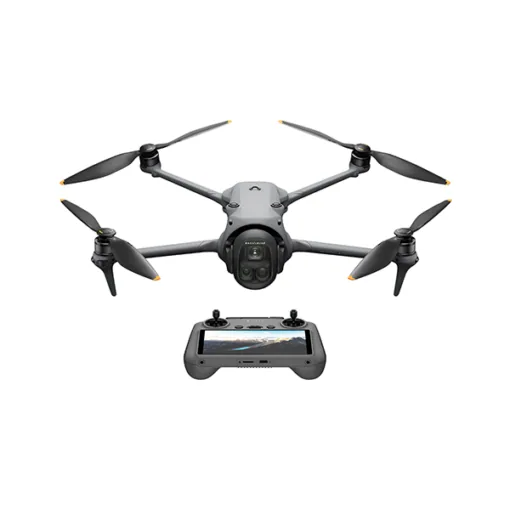
We are an authorised DJI reseller and carry the main professional brands: we will advise you with no obligation, also on WhatsApp.
Go to the shop
Yesterday DJI launched its new foldable drone, part of the Air series: the DJI Air 3 !
· 3 min read
Starting from the night of November 5, DJI made available one of the most anticipated drones for professionals and enthusiasts in the drone world.
· 4 min read
WELCOME DJI AIR 2S: what are the differences from the Mavic 2 Pro? The DJI Air 2S is here and packs a lot into its small frame!
· 7 min read
🍪 Cookies on AerialClick
We use technical cookies, which are necessary for the site (cart, login). With your consent we also use marketing cookies (Meta) to measure campaigns and show you relevant ads. You can change your mind at any time from "Cookie preferences" at the bottom of the page. Cookie policy