
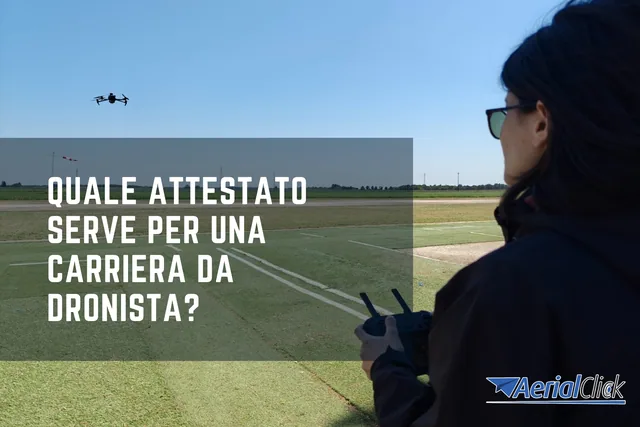
Flying a drone: which certificate do you need?
When it comes to flying drones for civil and professional purposes, the European regulations currently in force provide for a classification based on the level of...
· 4 min read
Archive article. Article from 2015: since 31 December 2020 European rules (Regulation EU 2019/947) apply in Italy, and the information on SAPR (UAS), certifications and certificates described here is no longer in force. Read which certificates are required today
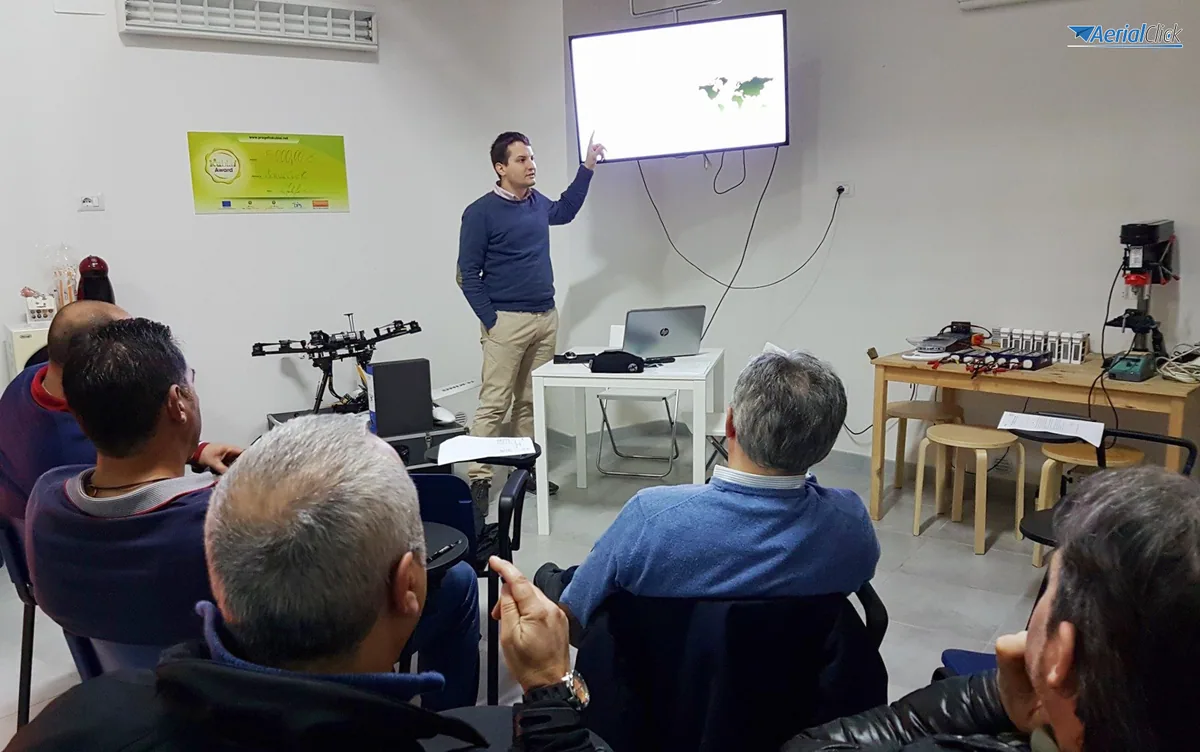
Common questions and very direct answers on the ENAC regulations for the use of SAPR (RPAS)
The first convention of the Italian APR Federation ended a few days ago, and among the most important speeches was that of Deputy Commissioner Luca Tagliagambe, representing the State Police, who is circulating a handbook on how to act when violations of the rules governing the use of SAPR are detected. Many industry insiders consider the regulation very strict and a bit excessive.
At Aerialclick, as industry insiders, we prefer to acknowledge that these are the rules at the moment and that they must be respected, above all to protect the enthusiasts and customers who are approaching the wonderful world of drones.
In this article we will try to explain in very plain, simple words the reasons behind such strict regulation, and also to explain the penalties faced by those who do not comply.
Until a year ago, before the civil aviation authority's regulation on drone use came into force in Italy too, many people were worried that the 'drone craze' could turn the skies of the Bel Paese into a melting pot of swarming aircraft, used by filmmakers, photographers and young pranksters in the mood for jokes and unauthorised filming.
Then someone wondered: what if one of those things fell on my head?
In reality the regulation that came into force also addresses these concerns, but it mainly aims to ensure that
You might also be interested in the article
3 reasons to bring your drone into compliance (and how to do it)
#1 - a boy plays with a small drone or model aircraft and loses control of it because he flies it without taking into account the moderate wind gusts forecast. The drone drifts out of his sight and control and falls on a car, damaging the bodywork.
#2 - a beach club wants to promote its afternoons with aperitifs and club music online; it does so by flying a drone that, besides filming without asking anyone's permission, lands badly and scratches the leg of a boy from the neighbouring beach club.
In these two cases no one would be responsible for anything. The owner of the drone could disappear and be neither traced nor answer for anything (neither for damage to property and people nor for the possible online publication of a video showing people who might have valid reasons not to let anyone know about it).
Obviously, in the beach club case, the manager says he turned to third parties, that the model aircraft is not his and that, however sorry he is, he does not consider himself responsible for what happened. (In reality no one is authorised to request services involving the use of a SAPR if it is not compliant, because it would be like paying an unlicensed, uninsured taxi driver to pick someone up at the station).
By contrast, for those who operate in compliance with the law, every machine is registered and tracked, just like every recognised pilot, so every incident has the name and surname of the person responsible and the number of the vehicle involved.
Many point out that it is excessive to treat model aircraft under the same rules as helicopters, but for the moment that is how it is and this is the regulation to follow.
After all, number plates are required on cars as well as on mopeds, even though they are different vehicles with different levels of danger and user responsibility. And the highway code and vehicle registration rules are the same for someone driving a large-engined car as for someone driving a small city car, a three-wheeler or a moped.
#3 – the night between 23 and 24 February. Five drones fly around sensitive targets in a Paris still shaken by terrorist attacks. These are obviously neither recognised SAPR nor drones authorised to fly in those areas.
With regulations that are also in force for security reasons, if a SAPR flies over at-risk areas the army is authorised to intervene, and the authorities are informed of every authorised flight. In times of international terrorism this is not a trivial matter.
If you think the Italian ENAC rules are excessive read the comparison with foreign regulations
Many ask: so why, for at least two years now, do I see every summer some drone flying over people on the beach, videos showing city centres full of tourists, videos filming concerts? Are they all authorised?
Answer: no, they are by no means all authorised or recognised. They do it for the same reason that some people drive uninsured cars, others drive without a licence, and still others run unlicensed taxis: they have no interest in the law or have not bothered to learn it. And they take on the responsibility for it, in both civil and criminal matters.
The tightening of regulations, even for those who use drones for work regularly and with all the necessary permits, is due precisely to the aerial wild west created by those who, for sales interests, try to downplay to customers both the extent of the penalties for those who break the rules and the extent of the damage that loss of control of one of these beautiful, delicate and technically complex work tools can cause.
In short, in our view, if a company that makes and sells drones gives customers the idea that anyone can operate or "play" with a drone without any consequences, it is perhaps acting a little in bad faith. But this is obviously only our point of view as SAPR manufacturers and designers, and the concern of those who want to spare the good-faith customer from 'minor unpleasant situations' such as those listed below:
We prepare you for the ENAC exam for the A1/A3, A2 and STS certificates with instructors who fly every day: classroom courses in Brindisi, Calatabiano and Potenza, plus online lessons.
Discover the ENAC courses
When it comes to flying drones for civil and professional purposes, the European regulations currently in force provide for a classification based on the level of...
· 4 min read
Drones are taking up more and more space in our lives, both as work tools and as fascinating hobbies. But before you take off with your...
· 4 min read
The Italian Civil Aviation Authority (ENAC) has recently released a circular providing crucial clarifications on the maximum take-off mass (MTOM) for...
· 2 min read
🍪 Cookies on AerialClick
We use technical cookies, which are necessary for the site (cart, login). With your consent we also use marketing cookies (Meta) to measure campaigns and show you relevant ads. You can change your mind at any time from "Cookie preferences" at the bottom of the page. Cookie policy