
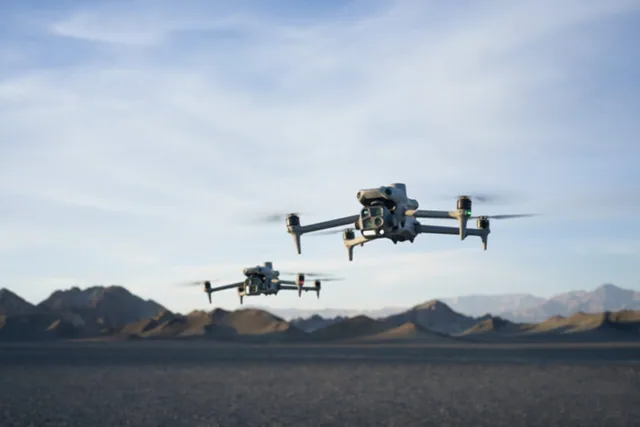
Autel Evo Max 4T and DJI Matrice 4E/4T: which enterprise drone to choose?
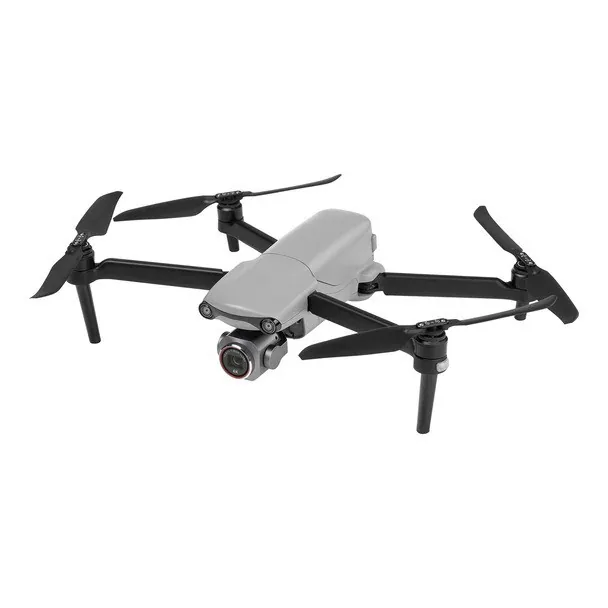
Autel Evo Max 4T, DJI Matrice 4E and DJI Matrice 4T are today three of the most advanced solutions in the enterprise drone landscape.
· 3 min read
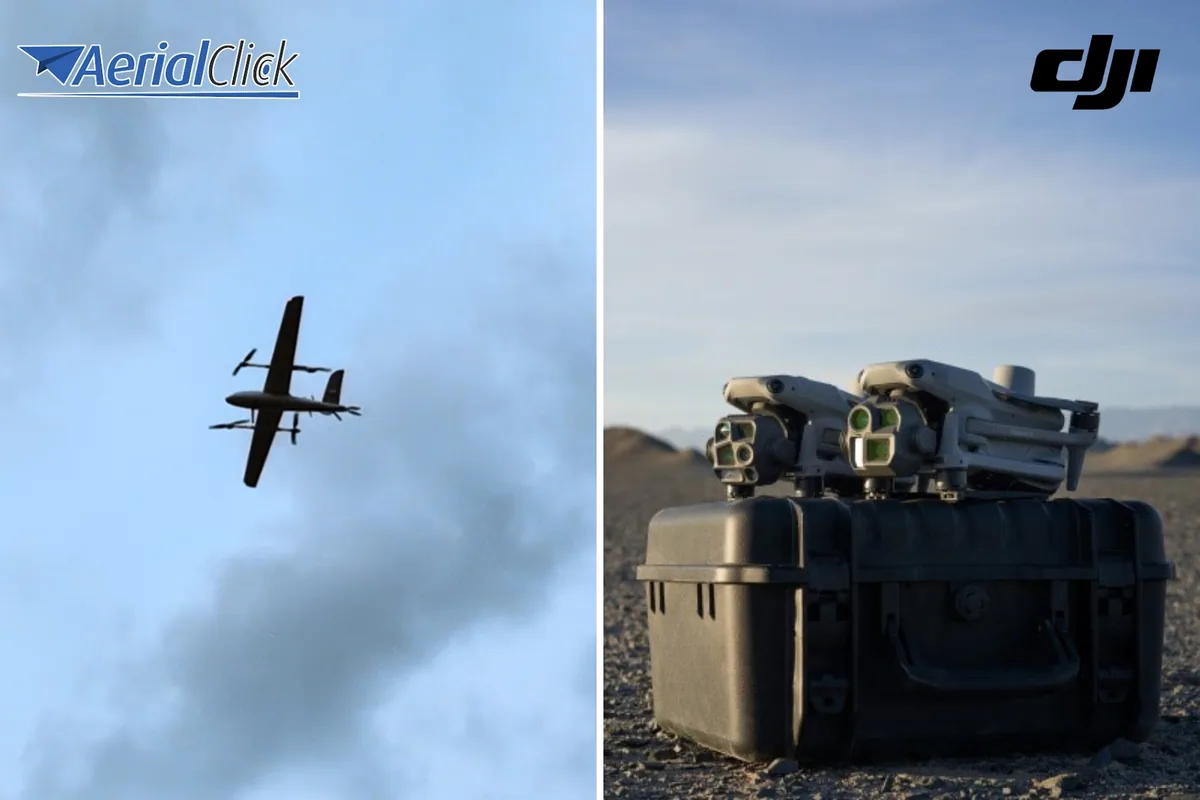
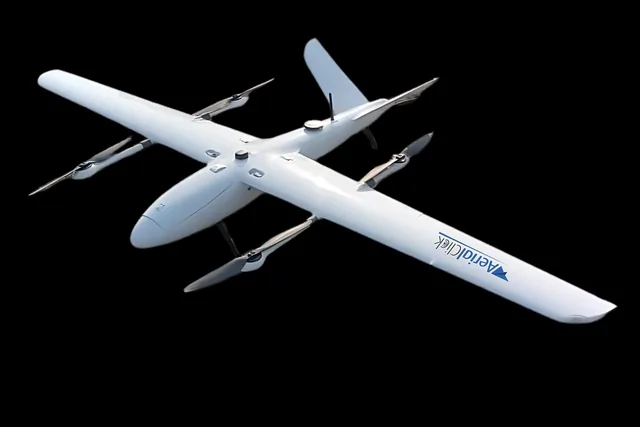
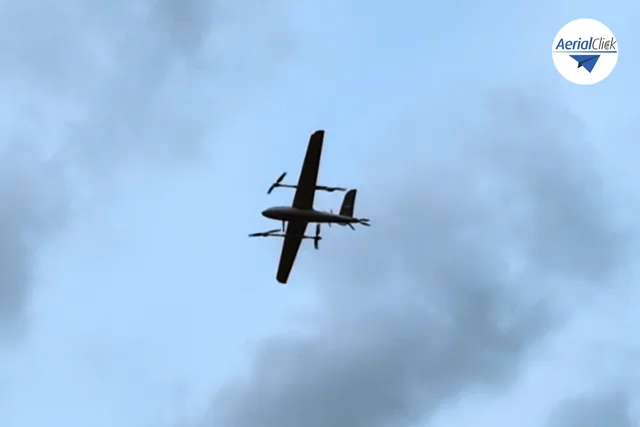
In recent months, Aerialclick has introduced an important new product to the world of professional drones: the Swallow VTOL. Thanks to its hybrid configuration, this drone can take off and land vertically even in tight spaces, then transition to fixed-wing flight. A solution that combines agility and versatility with high efficiency in horizontal flight.
To help professionals choose the drone best suited to their operational needs, it can be useful to compare this platform with one of the market's flagship quadcopters: the new DJI Matrice 4.
These are two different approaches to the same need: getting sensors and instruments airborne safely, precisely and efficiently. Comparing a VTOL with a quadcopter makes it easier to assess which technology best meets your specific operating conditions and mission objectives.
Both drones offer remarkable application versatility.
The Swallow VTOL, thanks to its Plug & Play system, supports a wide range of sensors for a multitude of application fields:
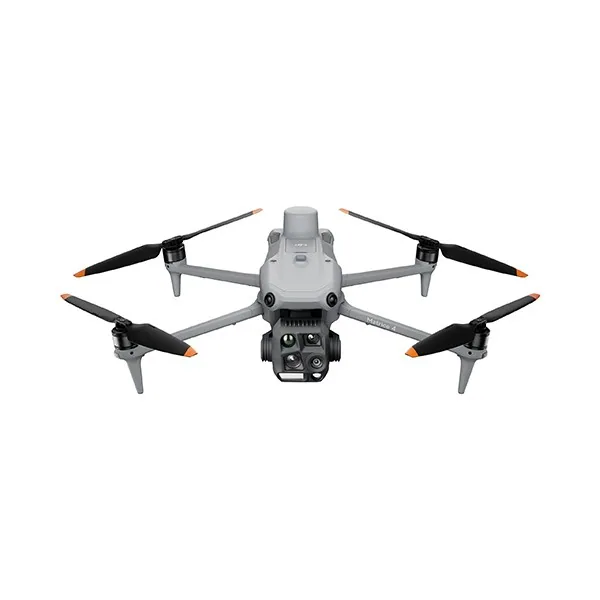
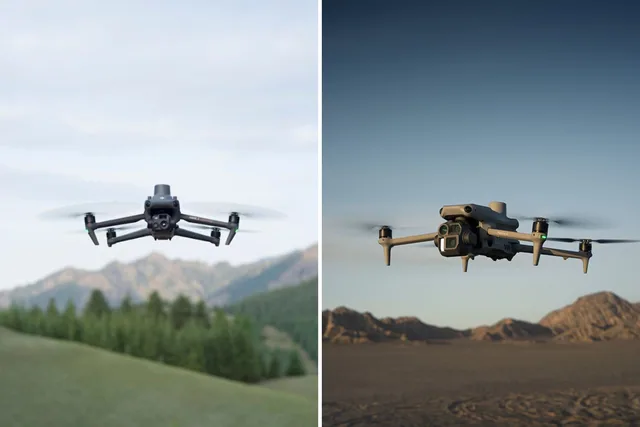
The DJI Matrice 4 is available in the 4T and 4E versions, each designed to offer versatility and precision in aerial operations in specific fields of application:
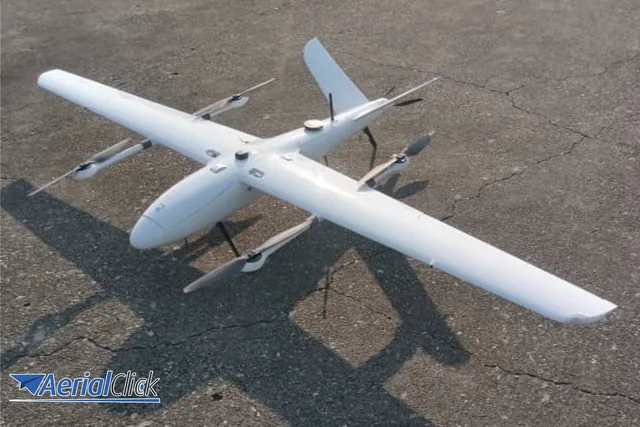
The Swallow VTOL is equipped with a 27,000 mAh Li-ion battery, which provides a flight time of approximately 2 hours without needing to land. At the end of the mission, the battery replacement is quick thanks to the easily accessible compartment, allowing a new takeoff in an extremely short time.
The DJI Matrice 4, on the other hand, uses a 6,741 mAh battery, which guarantees a flight time of approximately 46 minutes. Here too, quick replacement is possible, allowing operations to resume shortly after landing.
A key factor to consider is operating speed: the Swallow VTOL can fly at an average speed of 22 m/s, higher than what the Matrice 4 can achieve, which can reach similar values only in no-wind and optimal conditions. This makes the Swallow particularly suitable for covering large areas in a short time, benefiting the overall efficiency of the mission.
The construction of the two drones also reflects their respective operational purposes.
The Swallow VTOL is made of Kevlar and carbon fiber, composite materials known for their high strength-to-weight ratio. This choice keeps the drone's mass to a minimum without compromising its robustness, making it suitable for long-duration missions and demanding operating conditions, even in critical scenarios or exposed environments.
The DJI Matrice 4, on the other hand, adopts a structure made of high-quality plastic materials, designed to ensure solidity and reliability in standard operations. It is an effective solution for intensive professional use, while still maintaining good impact resistance and adequate thermal management of the internal components.
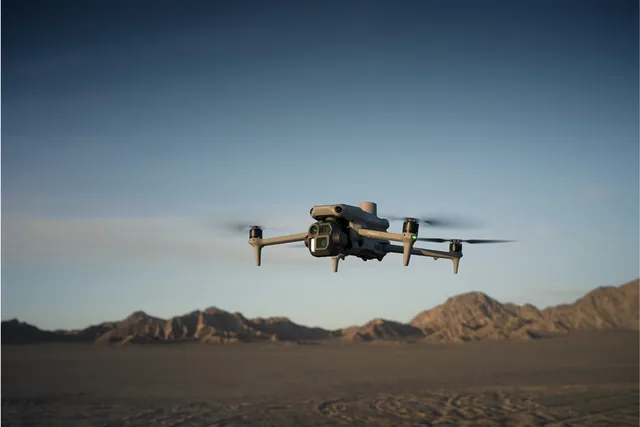
The DJI Matrice 4 comes with the DJI RC Plus 2 Enterprise Enhanced remote controller, which allows a maximum range of about 25 km in ideal conditions. It is a stable, reliable system compatible with the DJI Enterprise ecosystem, designed to ensure high performance even on complex missions.
The Swallow VTOL, on the other hand, uses the H16 Pro Smart Remote Control smart controller, which offers a maximum range of 30 km. In addition to the greater theoretical distance covered, this system is designed to offer high signal stability even in environments with interference, thanks to support for multiple frequencies and advanced transmission technologies.
Conclusions
Both drones are top-of-the-range solutions, each designed to meet different operational needs, dictated mainly by their configuration and structure.
The Swallow VTOL is particularly well suited for mapping and surveillance of very large or hard-to-reach areas, thanks to its long flight endurance and higher operating speed. It is also more versatile in the context of agriculture 4.0, as it can integrate various multispectral cameras — an area in which the DJI Matrice 4, which currently has no variant with integrated multispectral sensors, is less suitable.
On the other hand, for operations in confined environments, requiring precise maneuvers and takeoff/landing in tight spaces, the Matrice 4 may be the more functional choice, thanks to its compact quadcopter configuration and the great operational reliability typical of the DJI ecosystem.
In conclusion, the choice between the two systems depends on an analysis of operational needs.
Selected by our staff based on the topic of the article. Not sure which one to choose? Ask us for advice.
We are an authorised DJI reseller and carry the main professional brands: we will advise you with no obligation, also on WhatsApp.
Go to the shop
Autel Evo Max 4T, DJI Matrice 4E and DJI Matrice 4T are today three of the most advanced solutions in the enterprise drone landscape.
· 3 min read
The Swallow VTOL , developed and built by Aerialclick , is a latest-generation drone designed for professional photogrammetry, thermography and...
· 2 min read
When it comes to professional drones for mapping, surveying and advanced industrial applications, the new DJI Matrice 4 range and the established DJI Mavic 3...
· 4 min read
🍪 Cookies on AerialClick
We use technical cookies, which are necessary for the site (cart, login). With your consent we also use marketing cookies (Meta) to measure campaigns and show you relevant ads. You can change your mind at any time from "Cookie preferences" at the bottom of the page. Cookie policy