How can you shoot video from above when you can't use a drone?
If you don't have a drone, or you are not a certified RPAS pilot, or if you need to shoot aerial footage in areas where ENAC does not allow flying and you cannot start the procedures to request the necessary permits, there are other means and techniques that allow you to shoot beautiful footage from above, useful for making viral videos, promotional spots, short striking reports, and short clips to insert into the editing of medium-length and long videos.
Even without resorting to heavy cranes or renting very expensive helicopters.
You might also be interested in the article 6 reasons to become a drone operator
Let's see together some of these tools and techniques:
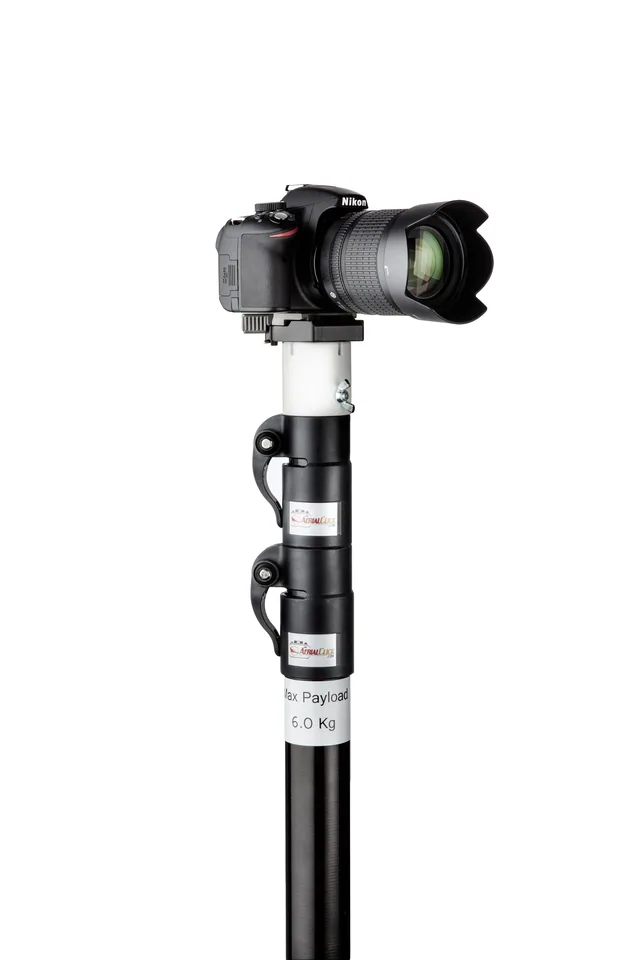
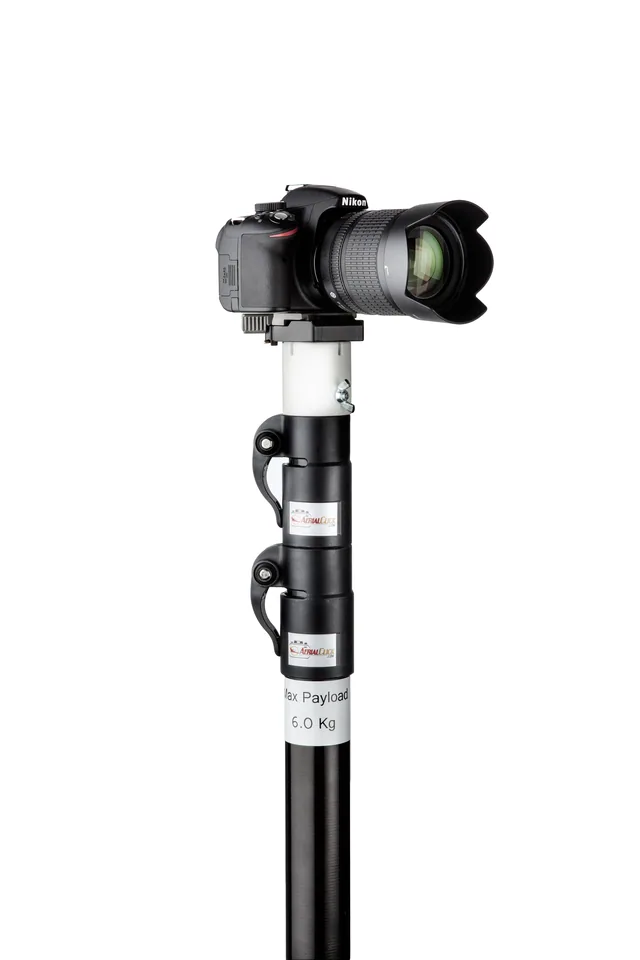
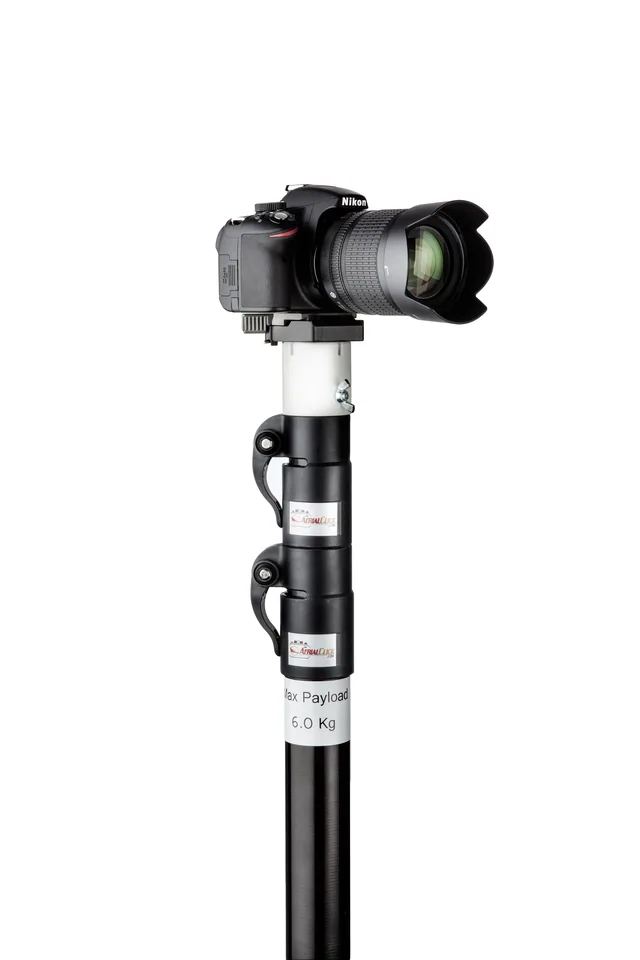
1 - Telescopic poles
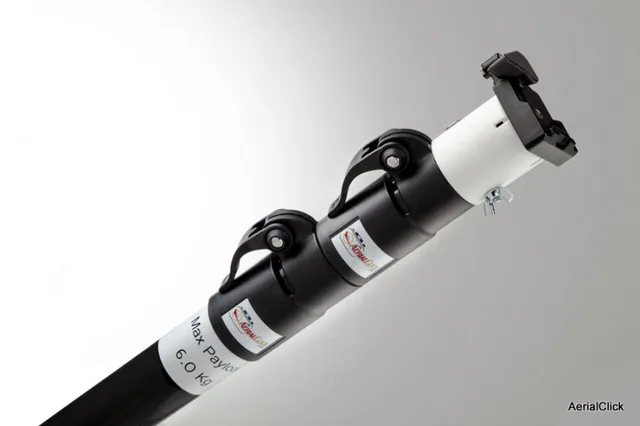
Our versatile, lightweight and multifunctional telescopic poles are back; with their low weight (especially if made of fibreglass like those from Aerialclick) and ease of handling, they allow you to shoot up to a maximum of 5 metres (in fact, taller ones can be designed, as we are currently doing at the request of a foreign customer).
The telescopic pole can be easily closed and moved to continue a 360° shot from above from another position and, by adding a swivelling head fixed to the top of the pole, you can achieve maximum verticality in the framing.
2 - Sliding rails
If your shooting takes place in a limited area, the film industry offers the installation of elevated sliding rails, on which you can slide a camera attached to a small rail carriage.
This equipment can be rented from various particularly well-equipped photo studios or from small production companies. Theatres (or the service companies they get their equipment from) and television studios could also help you.
You may also be interested in the article
5 tips for starting your own photography business
3 - GoPro, nylon and imagination
A more rudimentary but also cheaper method is to use a GoPro mounted on a small trolley that can slide quickly along a thick nylon line.
Of course, the line must be anchored at both ends, one of which must sit slightly lower than the other.
Since in this case it is not possible to "pilot" or control the movement, you need to choose the slope based on the travel speed you want.
The level of dynamism is guaranteed, with the maximum verticality in the framing.
4 - Elevated fixed camera... and the world rushing by
The movement doesn't necessarily have to come from the camera.
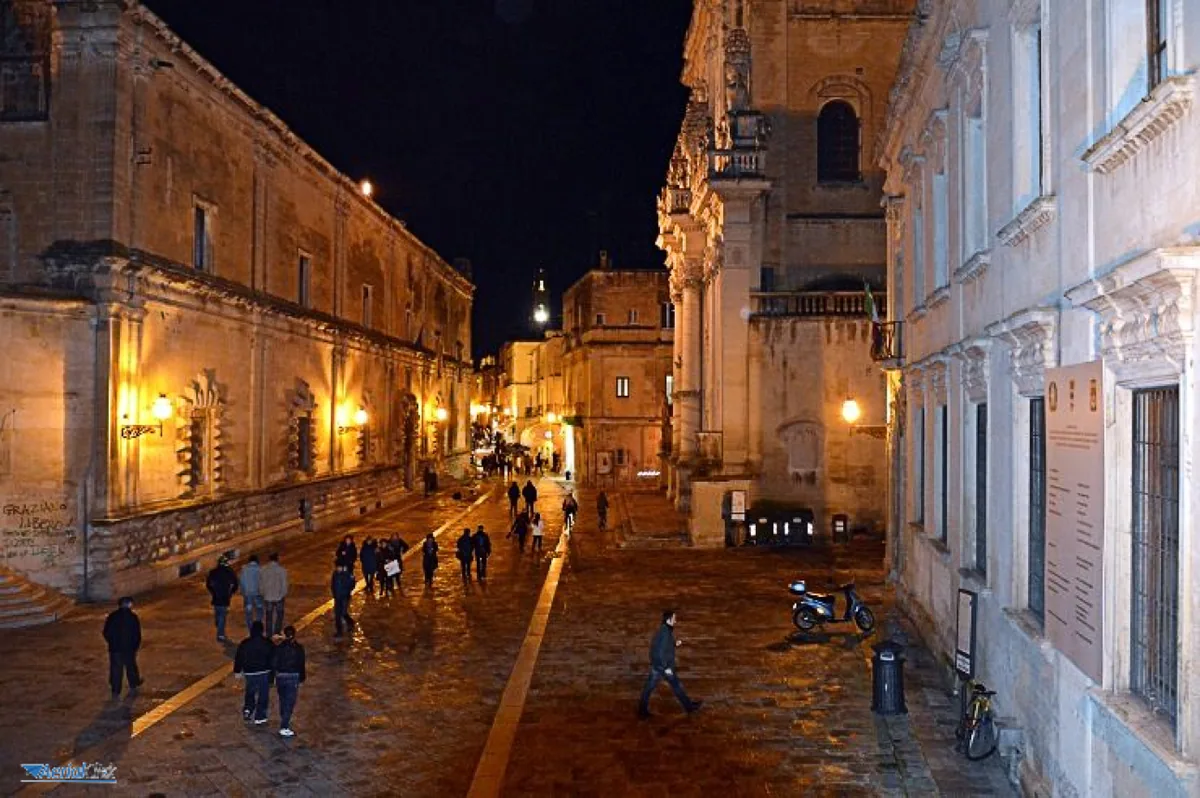
If what you want to add to your edit is a sense of dynamism, you can place the camera (whether it's a GoPro, a mid-sized video camera or a DSLR makes no difference, except for image resolution) at an elevated point, for example fixed on a telescopic pole secured in a vertical position. From there you can leave the shot fixed for a number of hours and use the footage in your edit as speed motion.
The effect is always very striking, especially if you repeat the experiment from different angles.
Of course, this kind of operation takes time, but it's worth trying and experimenting.
And you, how would you make your images fly, even without a drone?