
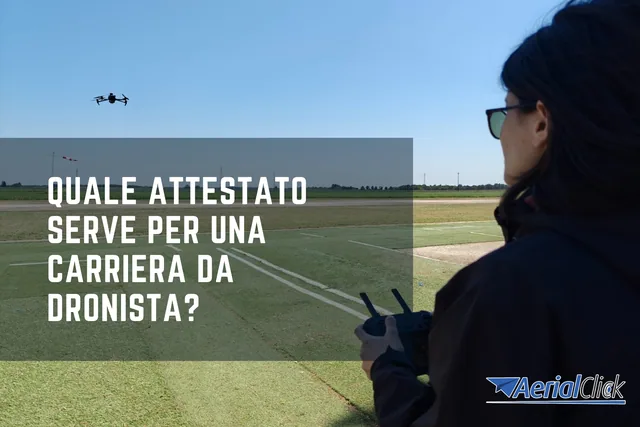
Flying a drone: which certificate do you need?
When it comes to flying drones for civil and professional purposes, the European regulations currently in force provide for a classification based on the level of...
· 4 min read
Archive article. Article from 2015: since 31 December 2020 European rules (Regulation EU 2019/947) apply in Italy, and the information on SAPR (UAS), certifications and certificates described here is no longer in force. Read which certificates are required today
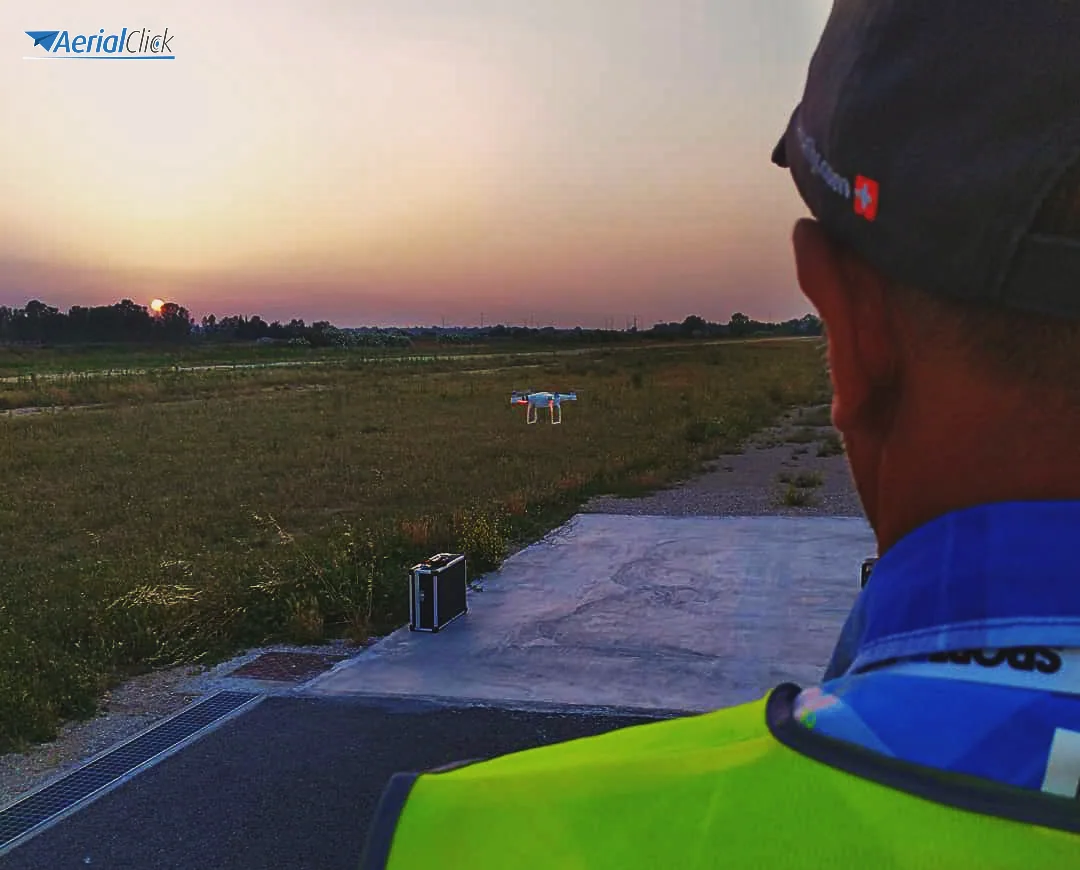
More and more people are interested in drone technology. But there are good reasons to become an RPAS operator, first and foremost the professional opportunities!
We know it's the trend of the year. Many don't realize it is the absolute certainty of the next 20. We are talking about drones, in their various types (quadcopters, hexacopters, etc.).
They can be very large and complex as well as small and medium-sized. Objects of sophisticated design or small robots with propellers, suited to a great many purposes: however you view them from a technical standpoint, multicopters are still under-exploited, but gradually various professionals, more than hobbyists, are coming to understand their potential in a great many fields.
But there are rules governing their use, created not only to regulate their presence in the skies but also to make users accountable for these tools, which have nothing to do with toys. Rules that serve to protect property, objects and personal safety, as well as privacy.
To fly a recognized drone in compliance with the rules, you must have a specific licence, issued following a course held by an authorized body.
There are several throughout the country. Some, as in the case of Aerialclick, are also able to certify and recognize the drones themselves.
But let's look together at why it is important (one could say essential) to work in compliance with the rules, and what the advantages are of a course and a certified RPAS pilot licence.
Needless to say, this is the main reason behind any training investment. But it is more than a valid reason to justify the commitment of time and money: in fact we know that a skilled and experienced RPAS pilot can provide services that are by now indispensable in the field of journalism, surveys and mapping that are periodically needed by engineers and surveyors as well as public administrations, the world of agriculture as well as professional photography and film making.
But being skilled is not enough, because by law, without a licence issued by an authorized body, it is not possible to enter into contracts.
After all, would you make agreements with a driver who doesn't have a valid driving licence?
Today the market demands increasingly cutting-edge, well-trained professionals who work in compliance with the rules. NOT having a qualification to operate RPAS means losing a percentage of potential clients every day (in both the public and private sectors). Knowing and following the "flight rules" keeps people and property safe, and also protects you from likely penalties.
Speaking of penalties, online you will see some beautiful videos shot thanks to flights by small and medium-sized drones, but what not everyone knows is that the filmmakers behind some of these wonderful videos have pending criminal charges in their countries, because in addition to flying without certification they flew over areas defined as hazardous to people's safety; something they would probably have known had they attended a course able to warn them.
In an international market it is important to offer your professional services across multiple geographic areas. And the importance of flying and operating in compliance with the rules is not an Italian prerogative alone. The most restrictive rules are certainly not ours, however serious they are and however 'limiting' they may seem at first glance.
International regulations do nothing but ratify the importance of certifications in the global drone market.
Flying a drone is open to everyone, but not suited to everyone. We are not only referring to the medical examinations you must undergo before the certificate can finally be issued, but also to the ability to take seriously a profession that is light years away from the hobbyist approach that is affecting the world of drones in these months.
That approach can only fade away, as has happened in many other fields, while the professional usefulness of multicopters can only stabilize and be ratified in the years to come, because, as we said, there are sectors that will no longer be able to do without them.
And these sectors can only grow.
Every drone application has rules that are sometimes common sense, and other times much more complex.
For this reason too, for anyone seriously interested in working with a drone, it is important to take a course held by authorized and recognized bodies.
We prepare you for the ENAC exam for the A1/A3, A2 and STS certificates with instructors who fly every day: classroom courses in Brindisi, Calatabiano and Potenza, plus online lessons.
Discover the ENAC courses
When it comes to flying drones for civil and professional purposes, the European regulations currently in force provide for a classification based on the level of...
· 4 min read
Drones are taking up more and more space in our lives, both as work tools and as fascinating hobbies. But before you take off with your...
· 4 min read
The Italian Civil Aviation Authority (ENAC) has recently released a circular providing crucial clarifications on the maximum take-off mass (MTOM) for...
· 2 min read
🍪 Cookies on AerialClick
We use technical cookies, which are necessary for the site (cart, login). With your consent we also use marketing cookies (Meta) to measure campaigns and show you relevant ads. You can change your mind at any time from "Cookie preferences" at the bottom of the page. Cookie policy