
DJI Neo vs. DJI Avata 2: which is the best FPV drone?
With the evolution of FPV (First-Person View) technology, DJI has recently launched two models that have captured the attention of drone enthusiasts: the...
· 4 min read
Archive article. Article from 2022: some of the models mentioned are no longer in production. Today the equivalent model is DJI Avata 2. Discover DJI Avata 2
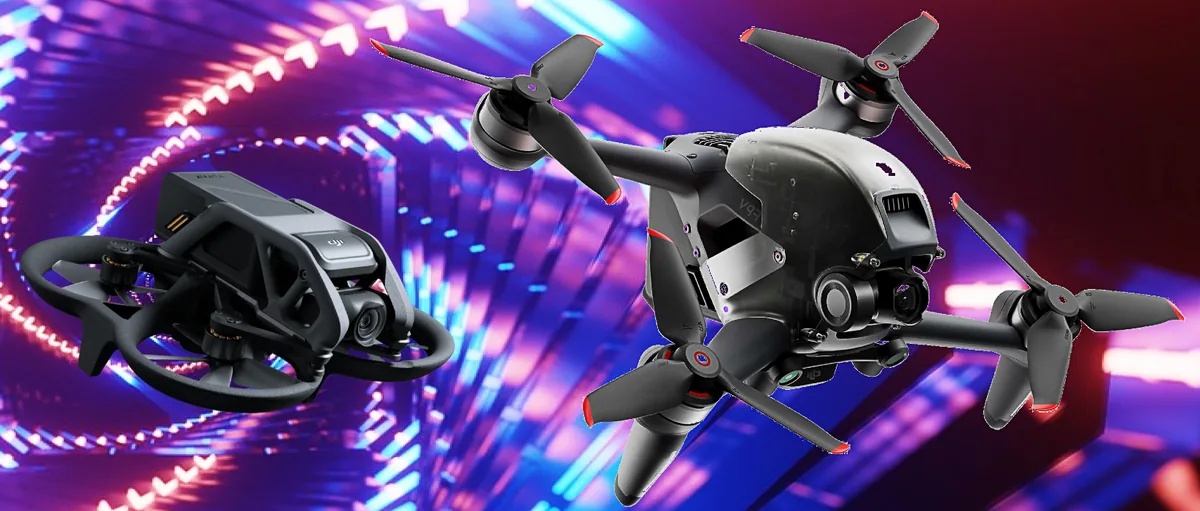
With the launch of Avata, DJI has released its first Cinewhoop drone.
But between the DJI FPV and the Avata, which of the two drones is better? Is the DJI Avata something you should hold out for, or should you simply buy a DJI FPV?
Simply comparing the DJI FPV and the DJI Avata makes it obvious that these are two very different drones. Both target the smaller drone markets that until now have been poorly served by the big commercial drone brands such as Autel and DJI.
FPV drones, as the name suggests, are designed to be flown in FPV mode. This makes flying more immersive, but above all, it allows very fast and precise manoeuvres. FPV drones are built for high-speed racing and offer high responsiveness and low latency in the radio and video signal.
Cinewhoop drones are almost the exact opposite. They are built for slow and stable flight, camera quality is one of their main features, and almost all of them have propeller guards that help keep flight safe, even in tight spaces or indoors.

The DJI FPV measures 255 x 312 x 127 millimetres and weighs 795 grams. That is, the DJI FPV is substantially larger and heavier than most other FPV drones, probably because of all the additional hardware that is not normally found on a DIY FPV drone.
The DJI FPV has now been in production for several months and many tests have confirmed just how incredibly difficult it is to fly.
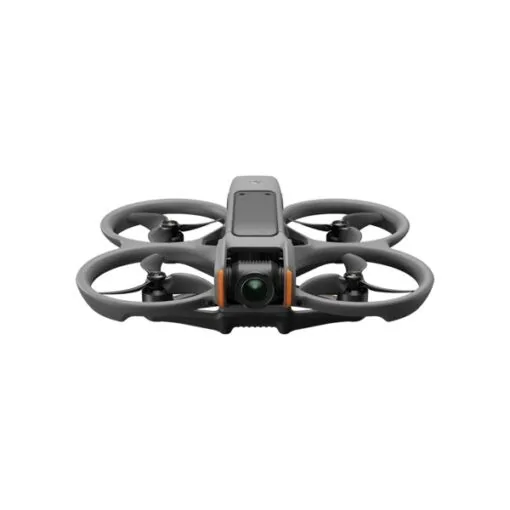
The DJI Avata measures 180 x 180 x 180 millimetres and weighs 408 grams. Although significantly smaller and lighter, the Avata does not drop below the 250-gram threshold, so a UAS certificate is required to fly it. The Avata is small enough to manoeuvre in tight spaces, which is practically the main use case of Cinewhoop drones.
The DJI Avata is equipped with ducted propellers and landing sensors. With such huge design differences, neither the DJI FPV nor the Avata really has a considerable advantage over the FPV and Cinewhoop drones currently on the market. The FPV was built for speed and durability, while the Avata for stability and flight safety. The choice comes down to the pilot's specific use case.
Camera quality has always been DJI's strong point, and both the DJI FPV and the Avata have an excellent camera system, as also shown by this video comparison.
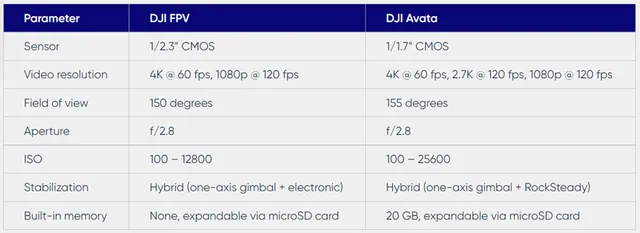
Both drones can record video at 4K resolution and 60 fps, but only the Avata can record 2.7K at 120 fps. Since both drones are designed to be flown in FPV, the cameras have very wide fields of view from 150 to 155 degrees. Both drone cameras have a fixed aperture and are aided by a combination of mechanical and electronic image stabilisation. The Avata has a much wider ISO range, which makes it suitable for capturing video in low-light conditions.
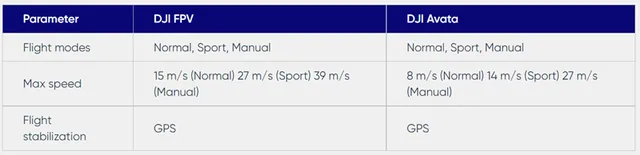
Both the FPV and the Avata offer Normal, Sport and Manual flight modes (the latter very demanding). There are speed limits for each flight mode, but the Avata has a much lower limit.
Both drones also benefit from GPS-assisted stabilisation, something DIY drones generally lack. Manual mode is aimed at drone pilots who already have experience flying FPV or CineWhoop drones.
If you prioritise speed, the DJI FPV is the clear winner in this category. However, the DJI Avata offers slow and steady flight.
The DJI FPV has an estimated maximum flight time of 20 minutes while the Avata can fly for up to 18 minutes on one battery.
Although the flight time claimed by DJI is impressive for a typical FPV or Cinewhoop drone, the actual flight time is likely to be shorter. Manual high-speed flying and performing fancy manoeuvres can drain a lot of power from the battery. Many DJI FPV owners find that they can only fly their drones for about 10 minutes when flying aggressively. The same discrepancy can be expected from the DJI Avata.
By default, the DJI FPV comes with a suitably compact remote controller. It is roughly the size of the controller supplied with the DJI Mini 2 but has protruding grips similar to a game controller. Since the FPV is designed to be flown with FPV goggles, the controller has neither a built-in screen nor a mount for an external device.
The DJI FPV also lets you switch between transmission modes, prioritising either low-latency or high-resolution video.
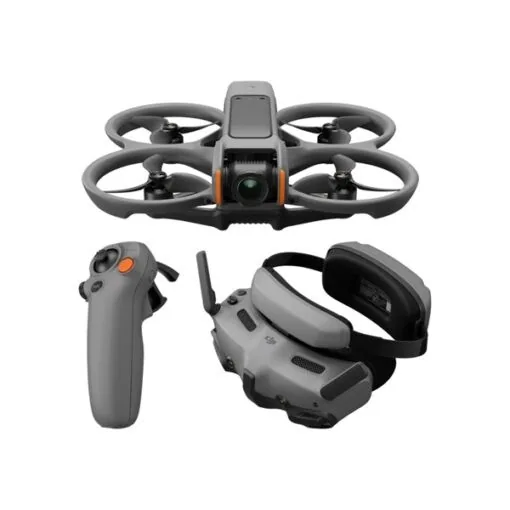
Both the DJI FPV and the Avata are designed to be flown with FPV goggles, making flights far more immersive and allowing very precise control. For this reason, FPV goggle compatibility and FPV performance are two very important parameters when evaluating these drones.
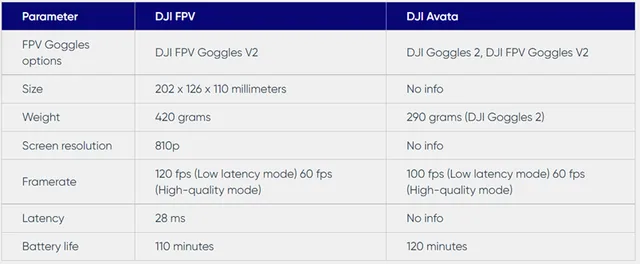
The DJI FPV Goggles V2 were introduced with the DJI FPV. These goggles stand out for their four antennas and insect-like look. In terms of performance, the FPV Goggles V2 offer good resolution, a high frame rate and low latency. They are powered by a battery pack that must be connected to the headset with a USB-C cable.
Both the DJI FPV and the Avata come with GPS receivers and obstacle avoidance sensors, two features you would not normally find on their DIY counterparts. Both drones benefit from GPS-assisted stabilisation and have Return-to-Home modes that activate on low battery or signal loss.
Both drones are also equipped with obstacle avoidance systems, but these are far more limited than those you might find on a modern Mavic drone. The DJI FPV has obstacle avoidance sensors on the bottom and front, while the Avata has sensors on the bottom only. These sensors are barely enough to prevent accidents but do not stop the drones from flying in enclosed spaces.
Both drones are equipped with AirSense, the DJI feature that uses an ADS-B receiver to alert the drone pilot to any crewed aircraft nearby. This feature has become standard on modern DJI drones and is nice to have if you plan to fly in an area with a lot of air traffic.
Choosing between the DJI FPV and the DJI Avata should actually be very easy because they are two very different drones. One drone is built for speed and manoeuvrability, while the other is for stable flight and cinematic filmmaking. These are two different schools of thought, and which drone to buy depends on the type of drone flying you prefer.
Many people are intrigued by these drones mainly because of the concept of FPV flight. This is understandable: the FPV flying experience is amazing and something that cannot be adequately described in words. Both drones offer a premium FPV flight experience and are ready to fly straight out of the box. This is great for those who just want to try FPV flying but do not want to build a drone completely from scratch.
The Avata's filmmaking capabilities and smooth flight may offer more to beginners, but you also need to consider its higher price. The FPV is ideal for those who have already used drones and are looking for a new, faster flying experience.
Those with experience flying Cinewhoop or DIY drones may be disappointed by DJI drones. The hardware components are fantastic, but these DJI drones leave no room for customisation. You will also have to deal with the usual drawbacks of flying DJI drones, such as having to request an unlock when obtaining permissions to operate in no-fly zones.
Selected by our staff based on the topic of the article. Not sure which one to choose? Ask us for advice.
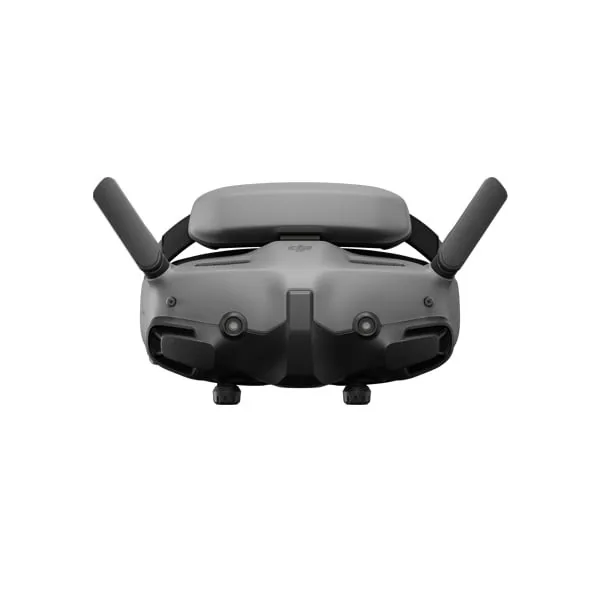
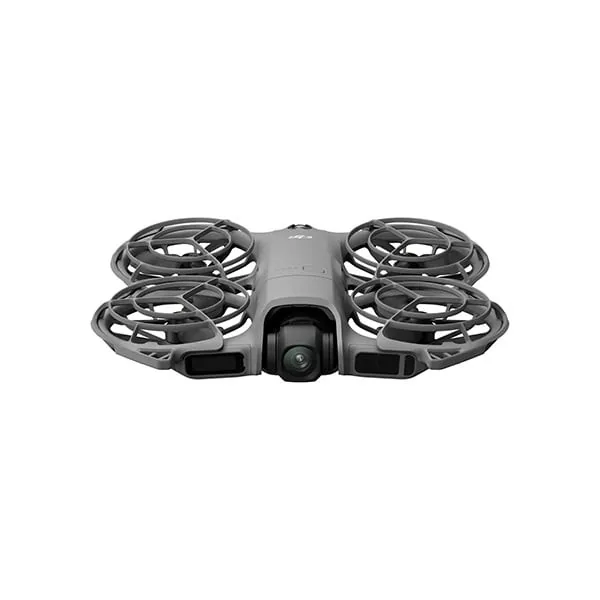
We are an authorised DJI reseller and carry the main professional brands: we will advise you with no obligation, also on WhatsApp.
Go to the shop
With the evolution of FPV (First-Person View) technology, DJI has recently launched two models that have captured the attention of drone enthusiasts: the...
· 4 min read
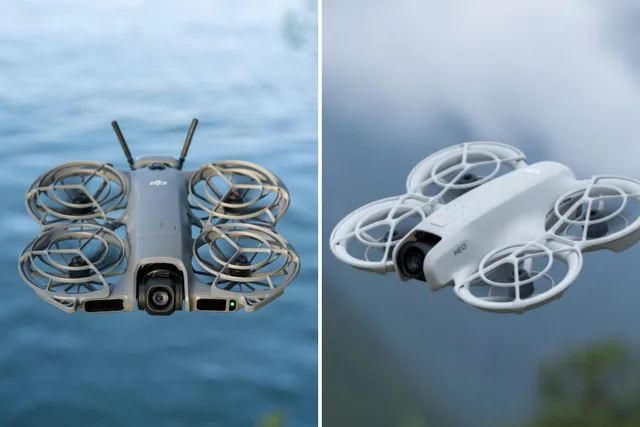
The Neo series was created to offer a simple, intuitive flying experience for those who want to start recording quality content without complications,...
· 3 min read
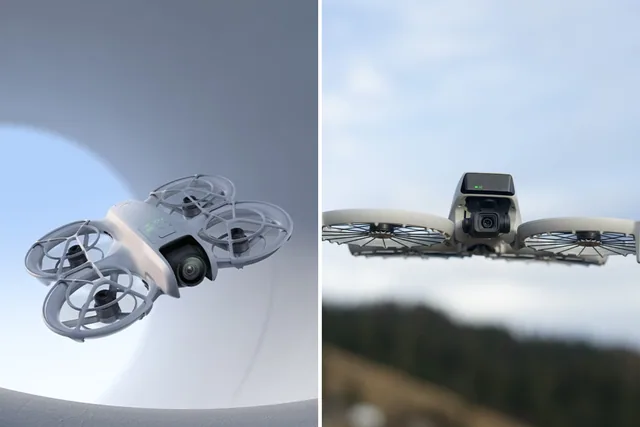
DJI has introduced, just a few months apart, two drones designed specifically to meet the needs of beginner pilots: the DJI Neo and the DJI Flip .
· 4 min read
🍪 Cookies on AerialClick
We use technical cookies, which are necessary for the site (cart, login). With your consent we also use marketing cookies (Meta) to measure campaigns and show you relevant ads. You can change your mind at any time from "Cookie preferences" at the bottom of the page. Cookie policy