
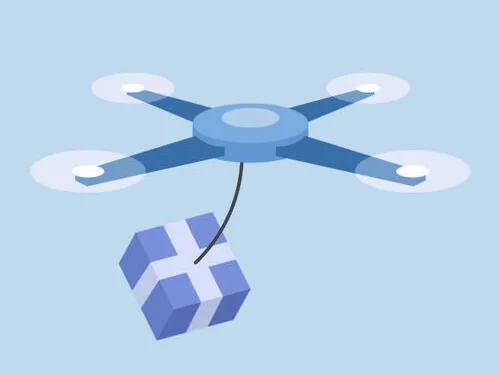
Drone delivery: the imminent future?
The dawn of drone-based logistics (drone delivery) closely echoes the development of commercial flight, which began about a century ago.
· 3 min read
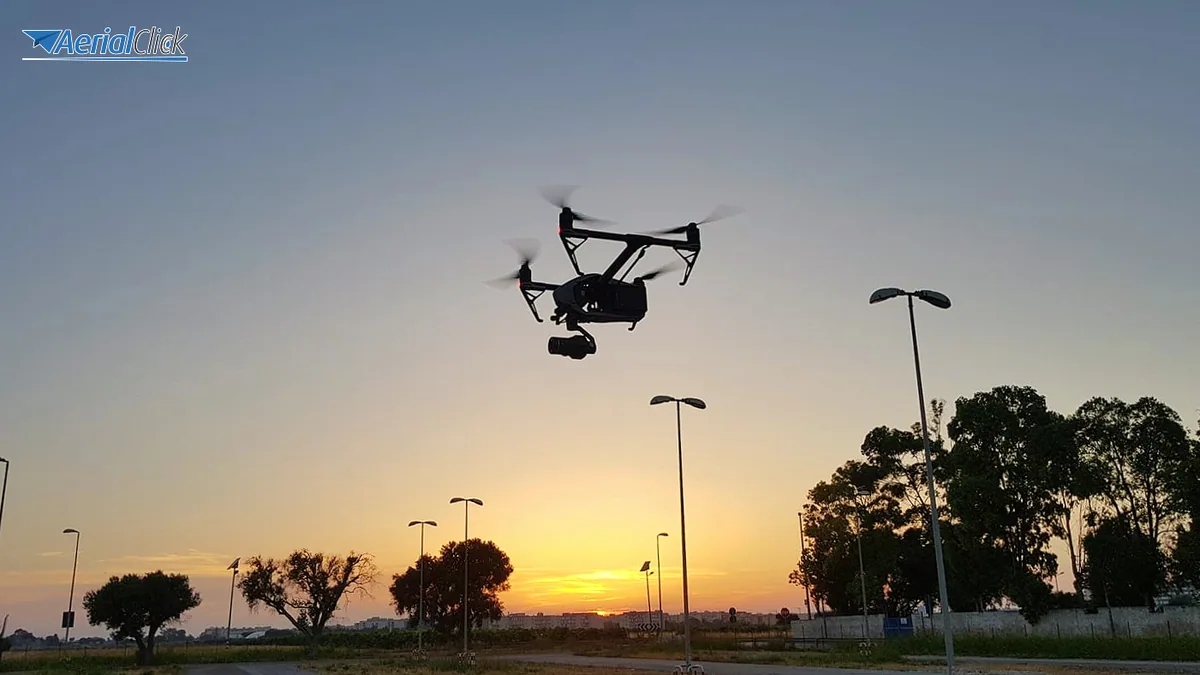
Why this sudden presence of drones in public debate? Let's find out together by telling their story.
Do you know how to say "drone" (the male bee) in German? It is Drohnen.
And do you know how to say "buzz" or "to buzz" in English? It is (to)drone.
If the word and the concept remind you of the term "drone", you are on the right track, because it is precisely from this onomatopoeic etymology that it comes.
Drones, also known as RPAS (remotely piloted aircraft systems) or simply RPA (remotely piloted aircraft), are now increasingly widespread and well known, although their endless and multifaceted potential was long ignored.
Let's delve together into the history of this "misunderstood genius" with innovative technology that was for a long time relegated to the purely model-aircraft field.
Although many trace the birth of a first prototype back to the Austro-Hungarian offensive against Venice in the mid-1800s, we have to wait for the First World War to see the first real AT project in operation (Aerial target). Indeed, while in the first case they were nothing more than hot-air balloons, with technologies very different from drones, the second was a real motorized aircraft with a piloting system operated via radio impulses. However, the interest aroused by these technologies, innovative though rudimentary, faded with the end of the conflict, both in Europe and in the USA.
At the end of the 1930s, as the Second World War approached, American research in the field of remote-controlled aircraft resumed and the Germans were the first to develop the line of attack drones.
By radio-controlling armour-piercing bombs through radio impulses, it was possible in 1943 to hit and sink the battleship Roma of the Italian Royal Navy and, in 1945, to blow apart the bridges over the Rhine to prevent their capture by the Allies. Thousands of soldiers died, and civilians too.
Military research in this field proceeded in fits and starts during the Cold War years and the espionage between the world's political blocs, and it was also tested during the Vietnam War. In recent years UAVs (APR) have been important, though not decisive, in the war in Afghanistan, thanks to their ability to gather information in enemy territory with a lower risk of human losses.
We have to get to the most recent years to start seeing the first drones used for civil purposes. And their potential immediately appeared so great that it attracted public and private bodies, as well as hobbyists, to invest in drones for the most varied functions.
The purpose and type of a drone vary depending on the devices and applications installed on and inside it.
For example, by installing a video camera it is possible to capture images and use this machine, simple and complex at the same time, to produce maps or footage.
This is also why the number of hobbyists who have combined their passion for aerial photography with that for model making is growing, and they have started using drones for pleasure. The phenomenon is growing so fast that in January 2014 the Italian Civil Aviation Authority (ENAC) issued the first regulation for unmanned aircraft, distinguishing two classes of UAVs, below 25 kg and above 25 kg (with a mention of the band below 2 kg maximum take-off weight): what public opinion often ignores or does not fully know is that, beyond the military and espionage goals of political quarrels between states, and even beyond the hobbyist purpose, now subject to entirely fair rules, there is by now an endless range of uses and developments, born and implemented since the 1990s, of drones for civil purposes.
These range from surveillance of ports, airports, nuclear power plants or other sensitive sites to prevent terrorist acts, to collecting samples from toxic clouds, operations to protect the population, firefighting or the prevention of natural disasters (especially floods).
Over a span of 100 years, drones have thus become a decisive tool for saving the lives of civilian populations, managing to cleanse their past reputation, which was due, as always, not to the tool itself but to the way it was used.
Selected by our staff based on the topic of the article. Not sure which one to choose? Ask us for advice.
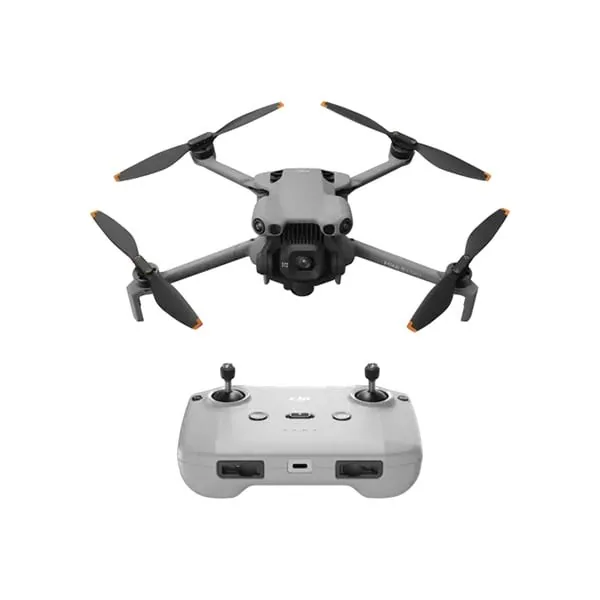
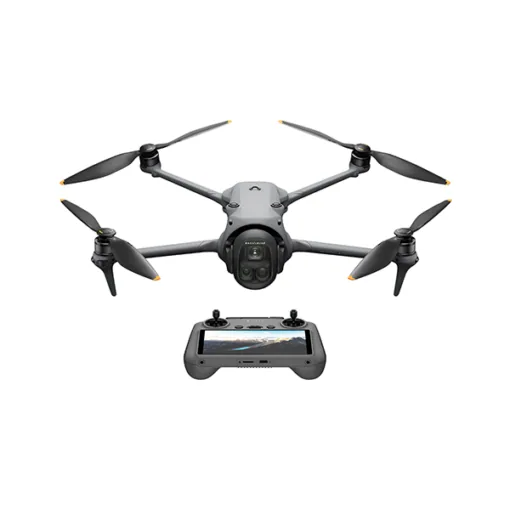
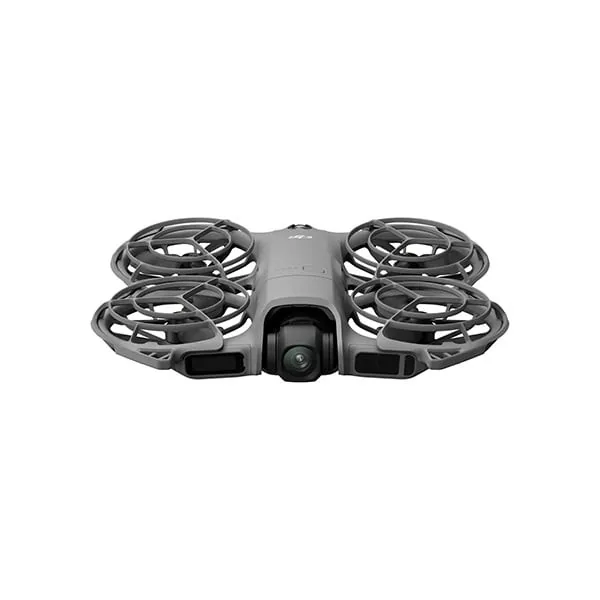
We are an authorised DJI reseller and carry the main professional brands: we will advise you with no obligation, also on WhatsApp.
Go to the shop
The dawn of drone-based logistics (drone delivery) closely echoes the development of commercial flight, which began about a century ago.
· 3 min read
Artificial intelligence (AI) is deeply transforming many sectors, and it is now on everyone's lips.
· 2 min read
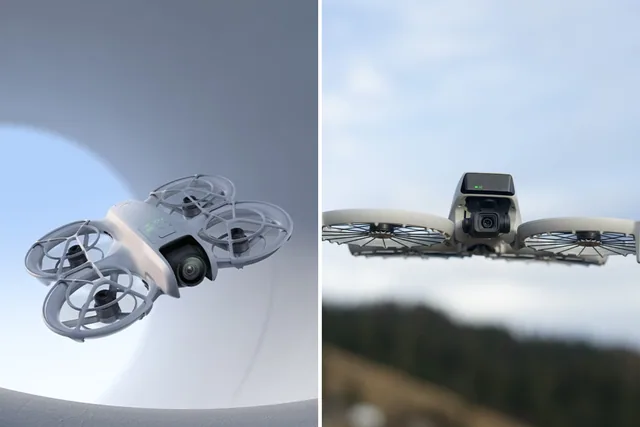
DJI has introduced, just a few months apart, two drones designed specifically to meet the needs of beginner pilots: the DJI Neo and the DJI Flip .
· 4 min read
🍪 Cookies on AerialClick
We use technical cookies, which are necessary for the site (cart, login). With your consent we also use marketing cookies (Meta) to measure campaigns and show you relevant ads. You can change your mind at any time from "Cookie preferences" at the bottom of the page. Cookie policy