
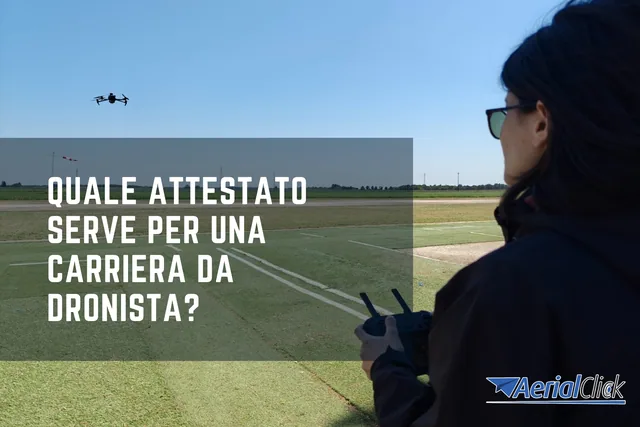
Flying a drone: which certificate do you need?
When it comes to flying drones for civil and professional purposes, the European regulations currently in force provide for a classification based on the level of...
· 4 min read
Archive article. Article from 2015: since 31 December 2020 European rules (Regulation EU 2019/947) apply in Italy, and the information on SAPR (UAS), certifications and certificates described here is no longer in force. Read which certificates are required today
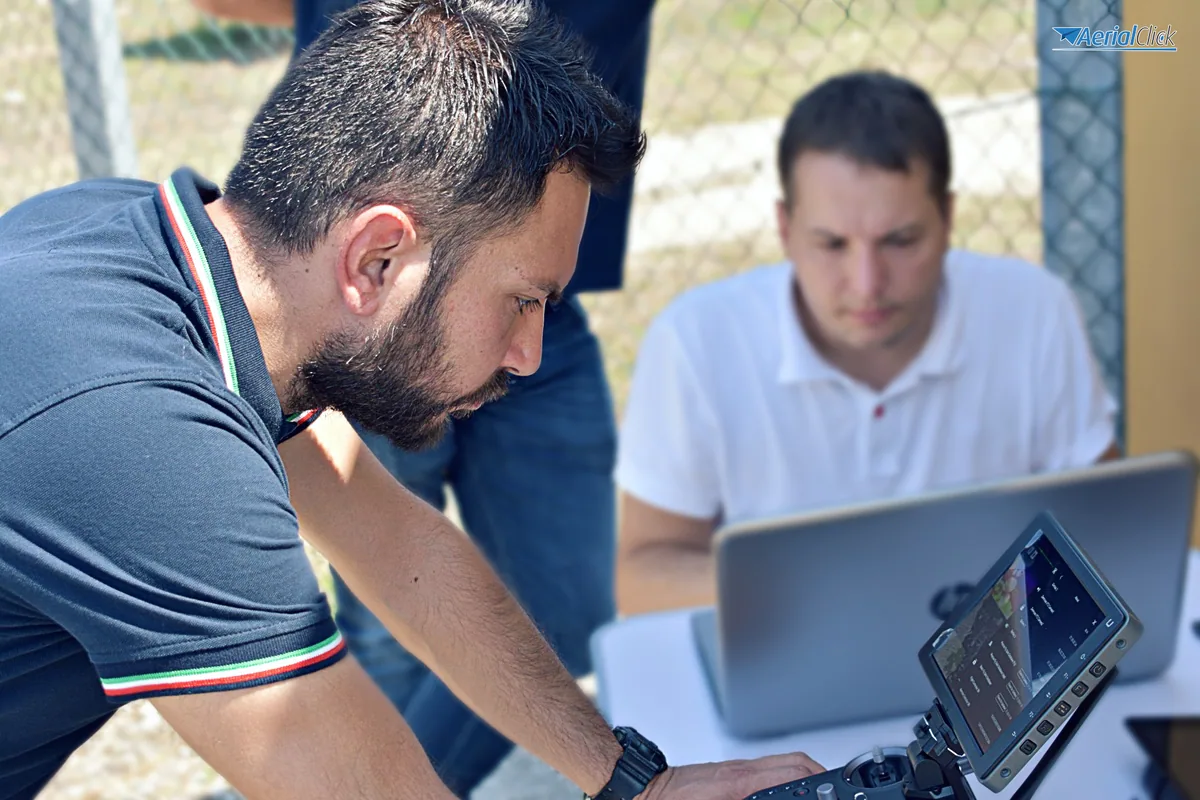
Do you want a mapping survey or aerial footage? Before relying on someone, there are three things you need to know.
We have already seen in some previous articles that today SAPR Operators (remotely piloted aircraft system operators), i.e. those commonly called "drone pilots", are in high demand in many fields: from photography and the film industry to civil engineering operations, from security to the mapping of agricultural areas, building land, at-risk territories, etc.
In light of current data, it is certain that in the coming years both public bodies and private companies operating in cross-sector fields will increasingly need to rely on this type of professional.
The boom in purchases of multicopters and small-to-medium-sized model aircraft in 2014 would make you think that Italy and the world are full of drone pilots!
In reality this is not quite the case, and for anyone who needs an aerial filming service or an activity that requires the use of a SAPR, it is wise to always keep 3 fundamental concepts in mind, to avoid unpleasant situations:
It is not enough for your trusted photographer to have bought and know how to fly a drone in order to provide services as a SAPR operator. To operate a drone, for your own purposes or on behalf of third parties, you must complete a course delivered by bodies and companies recognised by ENAC and the drone itself must also be properly recognised and "registered". The reason is not that hard to guess: multicopters are real aircraft, and the fact that they can be controlled from a distance means it must be possible to trace them back to their owner and to the operations the latter is authorised to carry out. It is a matter of safety and protection for property and people.
WARNING: if a pilot is not recognised by ENAC (nor is the drone they use), they are not authorised to enter into commercial contracts until this is in order.
You may also be interested in the article
3 reasons to make your drone compliant (and how to do it)
The Italian National Civil Aviation Authority has issued very strict rules not only regarding the certifications required for SAPR operators, but also regarding the areas that can be "overflown" with a drone. The restrictions are the same as those that apply to all other aircraft, and the areas over which you can fly are divided into 3 main subcategories: critical areas, non-critical areas and operations in mixed areas.
Flying over crowds of people is considered dangerous; uninhabited areas, where there is no risk to property or people, are not risk zones (always, however, at no more than 70 metres in height and within a 200-metre radius). Mixed zones are located within or near critical areas where it is nevertheless possible to identify a free zone, i.e. an area of minimised risk.
It is important that the client has an idea of the "plausible" requests to make to their SAPR service provider and does not induce them to commit violations, although a professional operator with good work ethics will be the first to tell the client which operations are unlikely to obtain permission from ENAC.
You may also be interested in the article Do you want to fly a drone? Here is what you need to know now
The main responsibility for carrying out the work in compliance with the rules (which are, moreover, shared abroad and even less strict than in other countries) obviously lies with the operator who is commissioned to do the job.
However, in case of a violation of the rules, the law also holds the client responsible.
If the drone pilot or their aircraft are not recognised, if the aircraft is not insured, if the service is carried out over risk areas and without authorisation, the law provides for significant responsibilities for clients as well, as clearly specified in Article 6 of the ENAC Regulation:
"... in the case of specialised operations on behalf of third parties, an agreement must be entered into between the SAPR operator and the client in which the parties define their respective responsibilities and agree on the suitability of the SAPR (Remotely Piloted Aircraft System) for the specific flight operation and on any related limitations and conditions, also with regard to the data protection provisions of Article 22 of this regulation)."
You may also be interested in the article ENAC rules explained in plain words
If a doctor, an engineer, a lawyer, a driver, a teacher or a swimming instructor need certifications and authorisations to do their job, it is not so strange that a complex job like the SAPR Operator must also operate while guaranteeing the safety and the interests of their clients, don't you think?
We prepare you for the ENAC exam for the A1/A3, A2 and STS certificates with instructors who fly every day: classroom courses in Brindisi, Calatabiano and Potenza, plus online lessons.
Discover the ENAC courses
When it comes to flying drones for civil and professional purposes, the European regulations currently in force provide for a classification based on the level of...
· 4 min read
Drones are taking up more and more space in our lives, both as work tools and as fascinating hobbies. But before you take off with your...
· 4 min read
The Italian Civil Aviation Authority (ENAC) has recently released a circular providing crucial clarifications on the maximum take-off mass (MTOM) for...
· 2 min read
🍪 Cookies on AerialClick
We use technical cookies, which are necessary for the site (cart, login). With your consent we also use marketing cookies (Meta) to measure campaigns and show you relevant ads. You can change your mind at any time from "Cookie preferences" at the bottom of the page. Cookie policy