
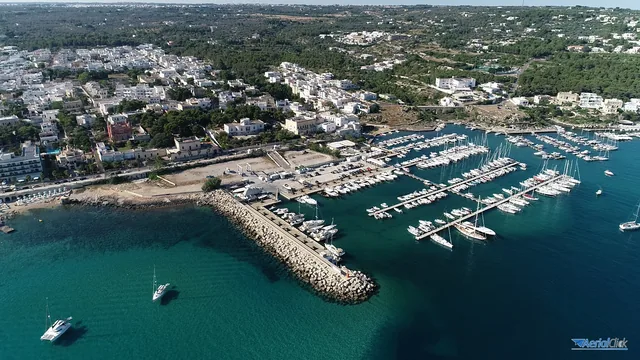
What is missing from your aerial photography?
#5 tips to get the best out of your shots from above.
· 5 min read
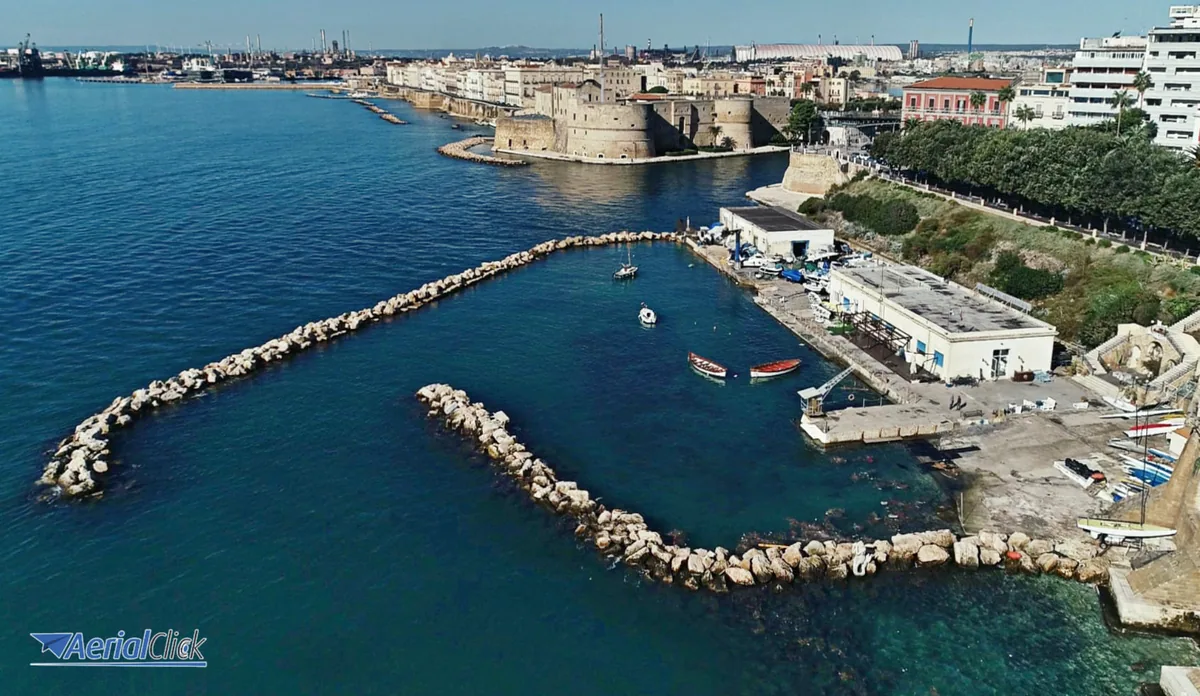
Let's find out together how and where to sell your photos and who to contact to sell your shots, depending on the equipment you use.
Aerial photographer, as we already said in a previous article, is a fast-growing profession; aerial photography, in fact, is on one hand a fairly complex technique that must be constantly refined and developed, with dedicated tools that require a lot of practice, but on the other hand it has considerable economic potential, because today it is in demand in a great many sectors.
If you are working hard and with devotion to improve your aerial photography technique, know that there are ways to start earning right away, building a small client base thanks to the internet as well, which will let you earn or supplement your income, rewarding your efforts and cushioning the investments you are certainly making in equipment and training.
Let's look at some of these techniques together:
If your portfolio already contains a set of images that you consider to be of good quality but that were not commissioned (and therefore not paid for), you can sell your shots through royalty-free image marketplaces.
There are several sites through which you can earn from selling images: going step by step, let's define the best ones, starting with the portals that are easiest to join and sell on.
ShutterStock is very simple: you just sign up. You can earn from 0.15 cents per image up to 30 euros. It's not a lot, but it's a start and, above all, if you have many professional-quality images to offer, you can earn quite a bit. We recommend offering eye-catching images for the advertising sector (because this site is mainly used by companies running visual marketing campaigns) and creating shots that are different from everyone else's.
123RF is just as intuitive as an entry system. Simply register and upload your images. If someone buys your photo using credits, you will earn 50% of the sale price (the rest goes to the company that created and runs the portal). If, however, the buyer has joined a subscription plan, you will be credited 0.36 dollars for each download.
CanStockPhoto, like the first two, is very easy to join, and you can also earn a percentage from the sale and promotion of other photographers' images. Here too the earnings percentage on a photo is 50%.
If, on the other hand, you know you have highly competitive, highly professional shots, we can recommend two other portals, with somewhat more complex entry requirements (often subject to approval) but on which you earn considerably more.
Corbis is the most prestigious: to join you must fill in an application. If your archive is very rich and very prestigious, try Shutterfly, where you can set the price of your images yourself (up to 100 dollars per shot) and create your own gallery. The site takes no percentage, but you have to pay an annual fee for the space (99 dollars for 5GB of hosting space and 199 dollars for unlimited hosting space).
Relying on well-established systems, widely used and visited all over the world, like the sites mentioned above, is a good method, but if you want maximum freedom to manage and sell your photos or entire aerial shoots at the price you decide, we also recommend having your own website from which you can sell online.
First of all you need to create a site suited to photos, choosing a suitable template. WordPress, for example, has many templates designed specifically for selling photos (just type PHOTO in the search bar in the WordPress admin under Appearance --> Themes).
Then you need to download a good plugin for online sales, connected directly to your PayPal account.
Whether you sell on other sites or through your own, it is important to manage your social channels as well as possible.
Every shot published on your site must be linked, through the social network sharing plugin, not only to your Facebook page - through which you let as many people as possible know that your shots are for sale - but also to Instagram and Pinterest. Twitter too now gives more space to images, but it is important to know how to use the right hashtags.
While the previous tips actually apply to every type of photography, don't forget that aerial photography and aerial videos have a greater potential for vitality that you need to use in order to earn and get known.
Edit small videos with your aerial photos/footage and create a YouTube format! This is a winning card not only for your promotion but also for earning from views.
It is now worth making a distinction based on the equipment you have available and usually use for your aerial shots. If you have a drone, keep in mind that you can earn money with it (even very well) if you hold a certification as a UAS (SAPR) operator.
Of course, in this case the potential to earn and to find clients is greater, precisely because someone who shoots aerial footage with a drone can go well beyond photography alone and work for many other companies (here is a list of companies urgently in need of UAS operators)
So, the first rule for earning (Find out how much) with a drone is to obtain your certification and have your drone registered. Even better if it is a professional model.
If your aerial photography is old-school and relies on traditional systems such as cranes, jibs and helicopters, it is best to target organisations that can pay well and bear considerable costs, because renting or buying this equipment is not a one-off expense (as with a drone) but is incurred at every shoot. Moreover, permits for occupying public land are also required for cranes.
In this case it is therefore a good idea to offer your services to public tourism promotion bodies, the film industry, and publishers that produce well-known, high-quality travel guides.
Of course, in this case the earnings are considerable, just as breaking into these circles is demanding.
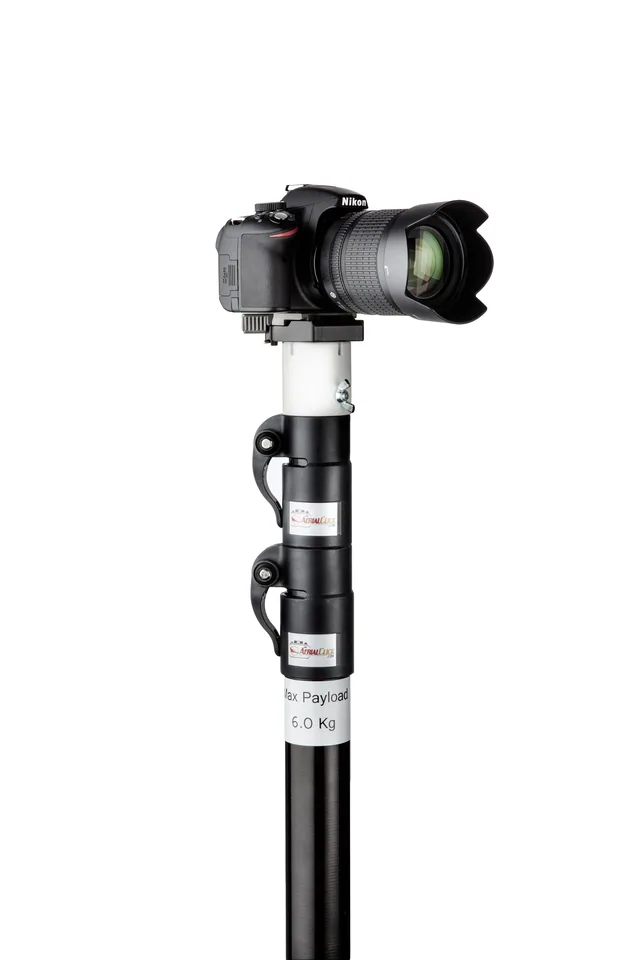
If you are not yet a big name in the aerial photography circuit but aspire to become one, the telescopic pole can take you far. It is handy and lightweight, has no drawbacks when it comes to authorisations (unlike drones and cranes) or licences (unlike drones and helicopters), and can work in the harshest weather conditions (unlike all the other tools).
With a telescopic pole you can offer services to small local organisations with a limited budget but a strong need for promotion, such as regional nature parks, amusement parks, and beautiful, high-quality accommodation facilities that are not backed by the giants of national and global tourism.
If you are just starting out, do not turn your nose up at bartering either: a service done for free can lead to further contacts and paid shoots, especially in smaller local communities, where business contacts are often built this way.
We close by giving you an extra gem, with The 3 S rule for perfect aerial photography.
Selected by our staff based on the topic of the article. Not sure which one to choose? Ask us for advice.
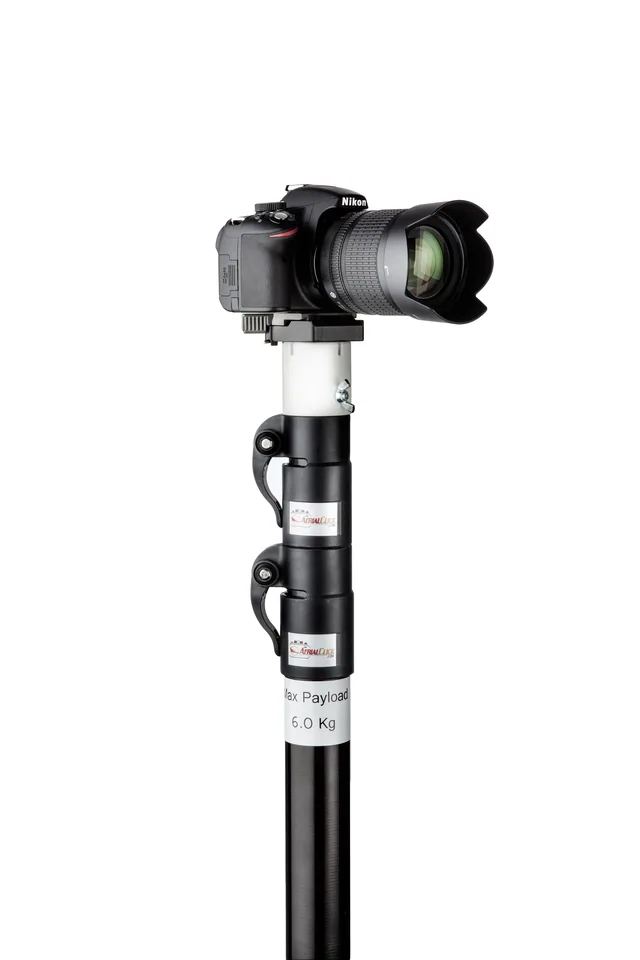
We are an authorised DJI reseller and carry the main professional brands: we will advise you with no obligation, also on WhatsApp.
Go to the shop
#5 tips to get the best out of your shots from above.
· 5 min read
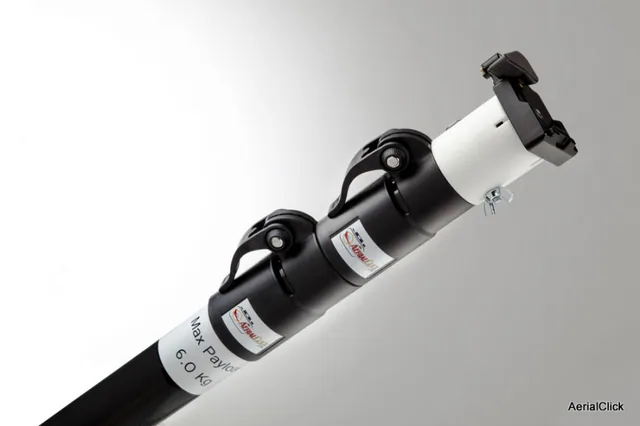
Fibreglass poles for shots from unusual angles and for aerial photos were our first flagship product and we have never given them up, for several reasons.
· 3 min read
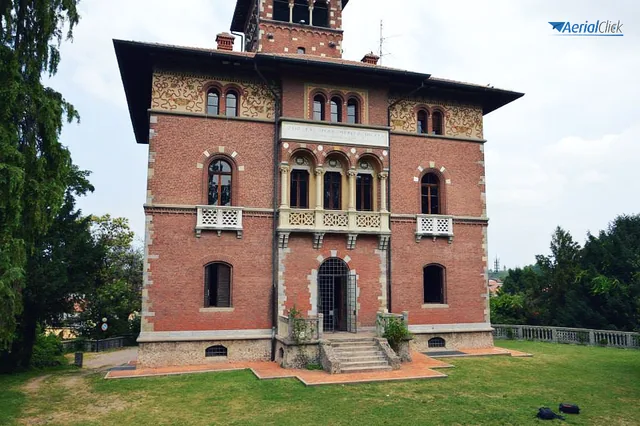
The real estate market is slowly but steadily recovering, in Italy as in the rest of Europe and the United States.
· 6 min read
🍪 Cookies on AerialClick
We use technical cookies, which are necessary for the site (cart, login). With your consent we also use marketing cookies (Meta) to measure campaigns and show you relevant ads. You can change your mind at any time from "Cookie preferences" at the bottom of the page. Cookie policy